Putting a swimming pool in your basement is an exciting idea that sparks the imagination. Yes, you can install a pool in your basement, but it requires careful planning, professional expertise, and a significant investment of time and money. In this post, we’ll walk you through everything you need to know – from feasibility and design considerations to structural and waterproofing requirements, safety concerns, pros and cons, and rough cost estimates. By the end, you’ll have a clear picture of what it takes to turn your basement into an indoor swimming oasis.
Is a Basement Pool Feasible?
The short answer is that a basement pool is feasible if your home’s structure can support it and you’re prepared for a complex project. Basements have been successfully converted into indoor pool rooms by homeowners who prioritize year-round swimming and privacy. In fact, some luxury homes feature basement pools as a showpiece amenity. An indoor pool in the basement offers year-round access regardless of the outside weather, allowing you to swim even during winter or rainy seasons. This can be especially appealing in regions with long winters or unpredictable British weather where outdoor pools are usable only in the warmer months. Imagine enjoying a swim in January, undisturbed by the outside world in the comfort of your home!
That said, adding a pool to an existing basement is not a simple weekend project – it’s far more involved than finishing a basement or other typical DIY upgrades. (In other words, it’s not your average DIY Basement Finishing job.) You will likely need to hire a professional design/build team including a structural engineer, pool contractor, and possibly an architect. These experts will assess whether your basement space can handle the pool’s weight and will plan how to construct and waterproof the pool without compromising your home’s foundation.
What about putting a pre-fab above-ground pool in the basement? Some homeowners have wondered if they could simply assemble an above-ground pool kit in an unfinished basement as a shortcut. In theory, it might be possible in a large, open basement – but it’s generally a bad idea to do this without professional guidance. The volume of water in even a small pool (thousands of gallons) is extremely heavy, and an improvised setup could overload your basement floor. One building code professional cautioned that a basement pool without proper engineering could have “a major dehumidification problem” and serious structural implications, calling it “a very expensive and bad idea.” In short, a basement pool must be purpose-built with proper structural support, waterproofing, and mechanical systems. If you have a small basement or low ceilings, a full-size pool may not be feasible – but you might consider smaller alternatives like a swim spa or Endless Pool unit (more on these in the design section).
If you’re constructing a new basement (e.g. building a custom home or addition), planning the pool from the start is ideal. It’s easier for engineers to incorporate the pool into the initial design of the foundation (basement installations at build time). Retrofitting a pool into an existing basement can be done, but will involve significant renovation work – possibly digging out additional depth, reinforcing walls, and rerouting utilities. This means added cost and complexity compared to an outdoor pool. However, if your heart is set on that indoor swim space, it can be achieved with the right team. Many people have successfully created home indoor pools in their subterranean spaces, proving that basement conversions of this sort are achievable for those prepared to tackle the challenges.
Structural and Waterproofing Requirements
Building a pool in your basement places enormous demands on your home’s structure. Water is heavy – roughly 8.3 pounds per gallon – so even a small pool contains tens of thousands of pounds of water. For example, a modest 8 x 15 foot lap pool could easily hold over 10,000 gallons of water (that’s ~83,000 pounds!). Your existing concrete basement floor and foundation walls must be able to support this weight without cracking or settling. A structural engineer will likely need to evaluate the foundation and floor slab. In some cases, they may reinforce the floor with additional concrete or steel, or design a special structural cradle for the pool. If you’re installing an in-ground style pool (where the pool basin is sunk below the floor level), contractors might have to cut into the slab and excavate soil to create the pit, then pour a new concrete shell or set a prefab pool structure in place. This process must be engineered carefully so it doesn’t undermine the foundation footings of your house.
Equally important is waterproofing. You must ensure that the pool itself is completely watertight and that no water will seep into the surrounding basement structure. Pool contractors will typically install a thick moisture barrier and a specialized pool shell (made of concrete/gunite, fiberglass, or a vinyl liner system) within the basement. The joints, piping penetrations, and perimeter all need meticulous sealing. Remember, a leak in a basement pool isn’t just a minor annoyance – it could lead to water infiltrating your foundation or causing serious issues like weakening structural concrete and fostering mold. Thus, a robust waterproofing system is mandatory.
Additionally, the basement walls and floor around the pool should be protected from moisture. Contractors often apply waterproof coatings or membranes to the surrounding concrete. They may also design the pool with a slight “buffer” space or drainage gap around it. Incorporating drainage systems is wise: for example, a perimeter trench drain or floor drain can capture any splashed water or overflow and route it to a sump pump or sewer drain. You’ll want a sump pump in good working order as part of this system, since a basement pool is below grade and any significant water spillage needs pumping out.
Structural modifications can extend beyond just the immediate pool area. If you need to raise the ceiling height (for instance, to have decent headroom for swimmers and pool equipment), that might involve alterations to floor joists or relocating ducts and plumbing. Any metal components in and around the pool, such as ladders or reinforcing steel, must be properly bonded and grounded per electrical code, and all electrical outlets/lights in the area must be GFCI-protected (Ground Fault Circuit Interrupters) to prevent shocks. In other words, your pool room’s electrical system will need an upgrade for safety – an aspect a licensed electrician will handle during the build.
Ultimately, don’t cut corners on structural and waterproofing requirements. As the University of Minnesota Extension notes regarding basement moisture problems: these problems are solvable, but there is a cost to doing it right. Investing in the proper engineering and waterproofing up front is essential. It may be expensive, but it will save you from disaster down the road. (The last thing you want is a structural failure or chronic leak in a finished basement pool – that could turn your dream project into a nightmare.)
Ventilation and Humidity Control
One of the most critical aspects of an indoor basement pool – and one that is often underestimated – is ventilation and humidity control. Unlike outdoor pools, an indoor pool releases moisture into an enclosed space. All that pool water evaporating will quickly raise humidity levels in your basement. If not managed, high humidity can lead to moisture issues throughout the basement and even the rest of your home. Condensation may form on windows and walls, and over time you could get mold growth (and even mould growth, as it’s spelled in the UK) on surfaces. To prevent this, you must have proper ventilation and dehumidification for your basement pool area.
At a minimum, plan to install a dedicated dehumidifier system sized for a pool room. Standard home dehumidifiers likely won’t cut it – you’ll need a heavy-duty, possibly commercial-grade unit or an HVAC-integrated solution. There are two main approaches: a ventilation-based system (which exchanges humid indoor air with outside air) or a mechanical refrigeration dehumidifier (which cools the air to draw out moisture). Many pool owners use a combination of both. A ventilation system can be great in cooler months, while a refrigerant dehumidifier works year-round to keep humidity around 50-60%. These systems can be complex; for example, one pool owner described installing a major dehumidification system tied into the ventilation system for their basement pool. It’s wise to consult an HVAC professional experienced with indoor pools. The Centers for Disease Control and Prevention (CDC) recommends following specialized ventilation standards (like ASHRAE guidelines) and using a separate air handling system for the pool area so that humid, chlorinated air doesn’t circulate to the rest of the house. In practice, this might mean your basement pool room has its own ductwork, exhaust fan, or isolated HVAC unit.
Keep in mind that controlling humidity isn’t just about comfort – it’s about protecting your home and health. The U.S. Environmental Protection Agency (EPA) warns that “the best way to control mold growth is to control moisture.” If you keep humidity in check, you greatly reduce the chance of mold or mildew taking hold on drywall, wood framing, or carpeting in your basement. Proper ventilation also helps vent out chemical odors (like chlorine) from the pool room so your whole house doesn’t smell like a swimming pool.
Expect to invest a few thousand dollars in a quality dehumidification and ventilation setup. Costs can range widely: a small integrated dehumidifier might cost around $2,400, while a large pool-specific HVAC system can run $10,000–$20,000 installed. This is on top of the pool cost itself, but it’s money well spent. Without it, your beautiful basement pool could turn into a sticky, fogged-up environment with peeling paint and moldy walls – not a pleasant scenario!
In day-to-day operation, you’ll want to monitor humidity with a hygrometer. Aim to maintain roughly 50-60% relative humidity in the pool space when the pool is in use (lower when not in use). Using an automatic pool cover when the pool is not being used is a huge help as well – it traps moisture (and heat) in the pool, reducing evaporation into the room. Many basement pool owners cover their pool every night or whenever it’s idle. This not only controls humidity but also saves on heating costs and acts as a safety barrier.
To summarize, plan for robust ventilation and humidity control from the start. It’s a non-negotiable aspect of an indoor pool. With the right system, you can maintain air quality and protect your home. Neglect it, and you risk peeling paint, wood rot, rusting fixtures, and mold spreading in your basement area and beyond. Take it from the experts and ensure your pool area is well-ventilated and kept dry – your home will thank you for it!
Design Options and Considerations for Basement Pools
Designing a basement pool is a fun but complex puzzle – you need to work within the constraints of your existing space while achieving the features you want. The good news is that basement pools come in all shapes and sizes. With a bit of creativity (and budget), you can likely find a pool design that fits your basement layout. Here are some key design considerations and options:
- In-Ground vs. Above-Ground Pool: In basements, in-ground pools (where the top of the pool is flush with the floor) are common because they make the pool feel integrated into the space. However, in-ground installation requires excavation of the floor and heavy construction as discussed. If excavation is not feasible, you could opt for an above-ground pool setup in the basement. This could be a custom-built pool structure that sits on the floor, or even a modular steel or fiberglass modular pool that is assembled on site. Above-ground models in basements often have decking built up around them so they look recessed. They can save considerable construction effort (no digging into the slab) and are limited to about 4 feet depth typically. Just ensure the concrete floor can bear the load with proper support.
- Pool Size and Shape: Evaluate how much space you can dedicate to the pool and surrounding pool deck (walking area). Basements sometimes have limited room, but pools can be designed to fit. You might go for a narrow lap pool if you want to swim for exercise – lap pools can be as small as 6-8 feet wide and whatever length you have (even 20-30 feet for a decent lap). There are also pools of all shapes: rectangular, L-shaped to wrap around columns, or even freeform if you have an irregular space. The corners and edges can be customized to avoid any obstacles like columns or foundation protrusions. Just remember to leave walking space around at least part of the pool for access and maintenance (even if one side is against a wall).
- Depth: How deep should a basement pool be? This depends on your usage. Many home indoor pools opt for a uniform depth of around 4 feet – sufficient for casual swimming and exercise without taking up too much vertical space. If you want a deep end (for diving or treading water), you might incorporate a sloping floor with, say, 8 feet at the deep end. Keep in mind that greater different depths mean more volume (thus more weight and more excavation). Also, consider your ceiling height – if the pool is deep, do you have enough headroom above the water? Often, basements have limited height, so a moderately shallow pool makes sense. For exercise, depth isn’t crucial; even 4 feet is fine for swimming laps or aqua aerobics. If kids will use it for jumping in, a deeper section could be fun, but always prioritize safety.
- Swim Spa or Endless Pool: If space is very tight, you might consider an Endless Pools installation or similar swim spa instead of a full-size pool. A swim spa is essentially a large, deep hot tub with powerful jets that create a current to swim against (so you can swim “in place”). Endless Pools are a popular brand of modular swim spa that many people install in basements and garages. They are smaller (maybe 7-10 feet wide by 14-16 feet long) and about 3-5 feet deep. They can be installed fully above-ground or semi-recessed. Because of their modular design, the components can often fit through standard doorways/stairs and be assembled in the basement. These pools let you swim laps infinitely (hence the name) in a small space. They also double as big hot tubs if heated. If your basement is small or you want to minimize structural work, a swim spa can be a great solution. It will still require ventilation and such, but the installation is simpler than a concrete pool.
- Movable Floors and Covers: For a truly innovative approach, consider a moving floor pool. This high-end feature involves a mechanical floor that can raise and lower to adjust the pool’s depth – or even come all the way up to serve as a solid floor that covers the pool completely. In a basement multi-use room, a movable floor means you can have the pool when you want it, then raise the floor to turn the space back into a dry rec room or exercise room. These systems are expensive and complex, but they wow factor is huge. One luxury pool builder noted that basement pools are perfect candidates for advanced moving floor technology, allowing the water depth to be adjusted and the surface to convert into usable floor space when needed. In essence, the pool room can double as regular basement space when the pool is “hidden,” which is an amazing way to maximize a subterranean living space. A moving floor is also a fantastic safety feature – you can close the pool off entirely. While not common in average home installations due to cost, it’s an option if budget allows (and it certainly gives your home some unique selling points for the future).
- Water Features and Amenities: Just because the pool is indoors and perhaps smaller than an outdoor pool doesn’t mean it has to be boring! You can enhance your basement pool with water features like a waterfall cascading down a wall, fountain jets, or therapy massage jets. Resistance swim jets (as used in Endless Pools) can also be installed in a traditional pool to give you a lap swimming experience in place. Lighting features are also key: since basements lack natural light, you’ll want to create a pleasant atmosphere with artificial lighting. Many basement pools incorporate LED mood lighting underwater, and uplighting on the walls. You can get creative with color-changing lights or star-like ceiling lights for a spa vibe. As one design firm notes, in a basement pool the absence of windows/natural light can be overcome with thoughtful lighting design to create an ambient, inviting space. Beyond the pool itself, think about other amenities: do you want a hot tub or spa next to the pool? A steam room or sauna in the corner? Basements often pair pools with spa features since it’s all contained in a private wellness zone. Just be mindful that each added feature (spa, sauna, etc.) will add to your ventilation needs (e.g. a steam room will pump even more humidity into the air).
- Materials and Finishes: Design your pool room with moisture-resistant materials. Avoid regular drywall on ceilings; instead use greenboard or cement board in wet areas. Tile or stone is ideal for flooring around the pool (with non-slip texture for safety). For the pool interior, you might choose a standard pool finish like ceramic tile, a vinyl liner, or marcite/plaster if it’s concrete. The aesthetic can be as luxurious or as simple as you want – from a sleek modern plunge pool to a themed “grotto.” Just ensure everything is rated for high humidity environments. Also plan for adequate lighting and electrical outlets, all GFCI-protected. And consider sound – indoor pools can be echoey, so acoustic panels or softer finishes on some walls/ceiling might help dampen noise from splashing and equipment.
- Layout and Access: Will the pool occupy an entire room, or will it be part of a larger basement layout? Some people devote the whole basement to a pool room, separated by glass walls or doors from other areas. This is good for containing humidity and keeping the pool secure from young kids. Others incorporate the pool at one end of a large open basement, which can create a stunning open leisure space (imagine swimming while others watch a movie in the adjacent media area). If you choose an open layout, you may need to extend your dehumidification system to cover the rest of the basement, not just the immediate pool area, since moisture will travel. Also, think about how you will get to the pool from the main floor – is there a convenient staircase or do you need to build one? Ensure doorways are wide enough for moving large equipment in and out during construction and for future maintenance.
In summary, designing a basement pool is about balancing what you want with what your space allows. Practically any feature of an outdoor pool can be brought indoors, from pools of all shapes and different depths to waterfalls and mood lighting. Prioritize the essentials (size, structure, ventilation) and then add the fun touches (lighting, jets, decor) to create your dream pool. With a thoughtful design, your basement pool area can be not just functional, but a beautiful escape. As one luxury installer put it, “underground basements provide the perfect setting for indoor swimming pools… Maximising the use of this space allows incorporation of pools, spas, saunas, steam rooms and gyms”. In other words, you have the opportunity to create a complete private wellness retreat right under your feet!
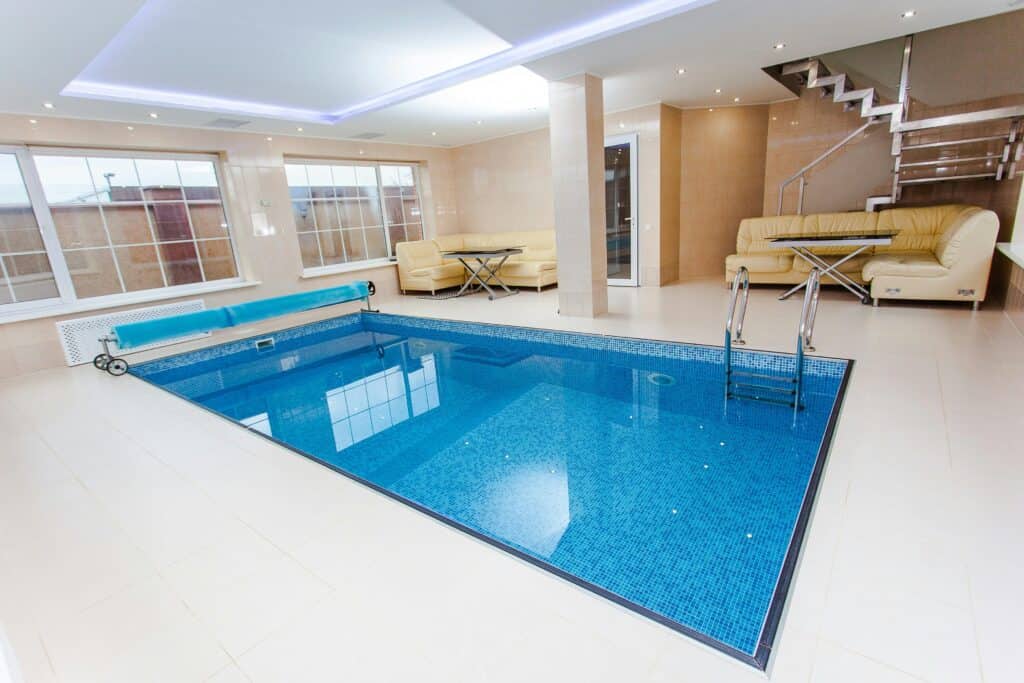
Example of a luxurious basement indoor pool design. Notice the use of lighting and seating in the pool area to create a relaxing, private oasis.
Safety Concerns and Considerations
When you install a pool inside your home, safety should be top of mind. All the same risks of an outdoor pool (drowning, slipping, electrical hazards) exist here – plus a few unique to indoor settings. You’ll want to take comprehensive safety measures to keep your family and property safe. Here are key safety concerns and how to address them:
- Drowning Prevention: Even though your pool is in the basement and out of sight of wandering neighborhood kids, it still poses a risk to young children in your household. In some ways, an indoor pool can be even more dangerous because it’s accessible year-round and is within the living space. Never allow unsupervised access to the pool. Ideally, the pool should be behind a locked door or have a safety cover. The U.S. Consumer Product Safety Commission (CPSC) recommends multiple “layers of protection” for any home pool – this includes secure barriers (like self-latching doors or fences), pool alarms, and power safety covers. For a basement pool, you might not put a fence around it (since it’s indoors), but you can:
- Install a self-closing, self-latching door on the pool room (and keep it locked when not in use).
- Use a pool safety cover that can support weight (automatic covers are available that lock in place).
- Set up door alarms or motion alarms that alert you if someone enters the pool area.
These measures are especially crucial if you have little kids. Drowning is silent and quick – so physical barriers and alarms are lifesavers. Also, always have basic rescue equipment (a life ring, shepherd’s hook) and a phone available poolside in case of emergency. Consider learning CPR if you haven’t – it’s a valuable skill for any pool owner.
- Slip and Fall Hazards: Water will inevitably get splashed onto the floor around the pool, making surfaces slippery. Use non-slip flooring material around the pool and in any changing/shower areas. Textured tiles, treated concrete, or specialty rubber flooring can provide better grip. Encourage everyone to walk (not run) in the pool area, and clean up puddles promptly. Also be mindful that stairs or ladders in the pool (and the deck surface) can become slip hazards if wet. Installing handrails and grab bars where appropriate can help, and ensure there is good lighting so that wet areas are clearly visible.
- Electrical Safety: Mixing water and electricity is dangerous, so all electrical components in a pool environment must be up to code. Make sure any outlet in the vicinity is a GFCI outlet (which will trip if an electrical fault is detected). Lighting fixtures near the pool should be rated for wet locations. Pool equipment like pumps and heaters need proper bonding and grounding. Typically, the pool contractor and electrician will handle this during installation. They will bond the pool water and any metal parts (connecting them electrically to dissipate any stray currents) and install GFCI breakers on circuits serving the pool room. Underwater pool lights, if you have them, must be special low-voltage lights made for pools. It’s worth having an electrician inspect the final setup to verify everything is safe and compliant with the National Electrical Code. Taking these precautions will prevent electrical shocks. As one expert noted about a basement pool project: “all of the electrical in the basement will [need to] be GFI protected… The pool bonding grid will be quite involved with all the foundation steel.” In short, don’t skimp on electrical safety – water and wiring don’t play nice without proper safeguards!
- Chemical Safety: Maintaining your pool’s water means using chemicals like chlorine (for a freshwater pool setup) or handling salt and chlorine generator systems (for a saltwater pool). In a basement, you’ll likely store pool chemicals nearby. Treat this like you would any household chemicals: keep them in a well-ventilated area (perhaps a ventilated cabinet), out of reach of children, and never mix chemicals together. Avoid storing large quantities of chlorine or acids in the basement without proper containment, as their fumes can be corrosive. The CDC recommends using separate air handling for chemical storage areas and keeping them ventilated and secure. Also, be aware that indoor pools can produce chloramine odors (the “chlorine smell”) if not properly managed – good ventilation and water chemistry prevent this, but if you ever smell strong chlorine in the air, check your water balance and ventilation.
- Structural Safety and Damage Prevention: We touched on structural requirements, but safety-wise, consider installing water sensors or leak detection systems in the pool room. These can alert you if there’s an unexpected water leak or flooding (for instance, if the pool were to overflow or a pipe burst). Early warning could save your foundation from damage. It’s also wise to have a backup power source (or at least an alarm) for your sump pump in the basement, since the sump pump is your first line of defense against accidental flooding. If your dehumidifier or ventilation systems stop (due to power outage or failure), try not to use the pool until they’re running again – extended high humidity can start causing mold growth on surfaces in a matter of days.
- Fire and Air Quality: With pool chemicals stored indoors and possibly gas pool heaters or boilers in use, don’t overlook fire safety and air quality detectors. Keep any flammable chemicals away from ignition sources (most pool chemicals are oxidizers, not fuels, but just be cautious). You may consider a chlorine gas detector or simply ensure excellent ventilation when handling chemicals. Standard smoke and carbon monoxide detectors in the basement (especially if you have gas-fired pool heaters or a gas furnace nearby) are important.
Overall, treating your basement pool with the same seriousness as an outdoor pool area is key. Establish rules for family and guests just as you would outside: no running, no swimming alone, keep the area secure, etc. When the pool is not in use, secure it with covers or locks. By addressing these safety factors, you can enjoy peace of mind along with your indoor swim. After all, a basement pool is meant to be a source of fun and relaxation, and taking precautions ensures it stays that way.
(On a related note: if you’re interested in other basement projects you can tackle, see our guide to Basement DIY for ideas – but when it comes to pools, professional help is a must!)
Pros of Having a Basement Pool
Why go through all this trouble? Here are some of the benefits and unique advantages of installing a swimming pool in your basement:
- Year-Round Enjoyment: A basement pool gives you year-round access to swimming. You’re not limited to summer or warmer months for pool fun. Whether it’s the dead of winter, a rainy day, or an unbearably hot afternoon, your indoor pool is ready to use anytime. You can maintain a comfortable water temperature and air temperature and enjoy swimming no matter the weather outside. This is a huge plus in climates with short summers or unpredictable weather (hello, unpredictable British weather!). Essentially, your basement pool can be an oasis of summer all year long.
- Privacy and Convenience: With an indoor pool, you have complete privacy. You don’t have to worry about neighbors’ eyes or sharing space at a community pool. You can take a dip early in the morning or late at night in total seclusion. It’s the ultimate private retreat. Additionally, you don’t have to leave your house to enjoy a swim – no driving to the gym or beach. The convenience of walking down to your basement in your robe and having a swim is unparalleled. This can greatly increase your use of the pool (it’s so easy to use daily when it’s in-house). And if you’re someone who values privacy for sunbathing or aquatic exercise, an indoor basement pool is ideal.
- Weather-Proof Swimming: Indoor pools are unaffected by outside conditions. Unlike outdoor pools, you won’t get leaves, bugs, or debris blowing into your basement pool. There’s no rainwater filling it up, no need to close it during winter, and no concerns about the outside world at all. This means cleaner water and less cleaning time – no fishing out leaves every day. Also, because the pool is in a controlled environment, you avoid sunburn and UV exposure while swimming (which can be a benefit for those sensitive to sun or who want to avoid too much sun). The pool also won’t be cooled by cold winds or cold nights, meaning it can be more energy-efficient to maintain its temperature.
- Lower Maintenance (Compared to Outdoor): Many find that indoor pools are easier to maintain in terms of cleanliness. As noted, no debris falls in, and there’s less opportunity for algae blooms since the pool isn’t sitting in direct sun (unless you have sunlight coming in). You’ll still need to maintain water chemistry, but you may use fewer chemicals than an outdoor pool that’s battling the elements. Also, indoor pools don’t require winterizing or opening/closing each year – it’s in operation continuously. With a proper cover and dehumidifier, you’ll have a relatively stable environment. Equipment may also last longer since it’s not exposed to temperature swings or weather. One caveat: you will need to maintain the HVAC and dehumidification systems too, but overall routine tasks like vacuuming, skimming, etc., are generally less labor-intensive indoors. (On average, pool owners might spend a few hours a week on maintenance. Indoor pool owners often report spending less time on cleaning chores than outdoor pool owners, since the environment is controlled.)
- Home Luxury & Lifestyle Perks: A basement pool can transform how you use your home. It effectively turns your basement into an at-home spa or recreation center. This is a fantastic perk for fitness enthusiasts – you have a built-in space for low-impact exercise like lap swimming, water aerobics, or therapy. It can also be a family fun zone – kids can play in the pool no matter the weather, hosting pool playdates or birthday parties even in January. For adults, it’s an amazing entertainment feature: imagine inviting friends over for a winter pool party or a relaxing spa day. You can also integrate the pool with a home gymnasium or wellness area. Many people pair basement pools with a hot tub, sauna, or steam room, plus maybe a small lounge area with towels and a mini-fridge for drinks. It truly can be like having a private health club at home. This daily convenience might improve your health and happiness – swimming is great exercise and stress relief that’s now easily accessible. The pool area could also serve as a striking design element – a beautifully lit pool visible through glass doors can add ambience to your home.
- No Lost Backyard Space: If you put a pool in the basement, you preserve your yard for other uses (gardening, play space, etc.). This is great if you have a small lot or don’t want to sacrifice green space for a pool. In urban areas or properties with limited outdoor room, a basement pool is sometimes the only way to get a private pool at all. You get your pool without taking up any outdoor space or dealing with outdoor construction and landscaping. Additionally, there’s no concern about leaves from trees or neighboring properties affecting your pool since it’s safely tucked indoors.
- Potential Property Value and Uniqueness: A well-executed basement pool can add to your property value in the sense of desirability and uniqueness. It’s a high-end feature that could attract certain luxury buyers in the future. At the very least it gives your home a “wow factor” – it’s a conversation piece and a highlight in any listing. While the property value increase may not equal what you spent (more on that later), it can make your home stand out. In markets where indoor pools are rare, having one can position your home in a niche category for buyers seeking that luxury. It can be a unique selling point if and when you sell. However, keep in mind it will appeal to a specific segment of buyers (some might love it, others might see it as a maintenance burden). Overall, though, it undeniably elevates the home’s luxury profile.
In summary, the pros of a basement pool revolve around ultimate convenience, privacy, and climate-controlled comfort. It’s about creating a private retreat for leisure and fitness that you can enjoy every day. For those who love swimming or want the benefits of aquatic exercise at home, a basement pool is a dream come true. It turns an underutilized basement area into possibly the most enjoyable space in the house.
Cons and Challenges of Basement Pools
While the idea is alluring, it’s important to consider the downsides and challenges of putting a pool in your basement. Here are some of the significant cons:
- High Initial Cost: Installing a basement pool is very expensive. It’s often far more costly than building an outdoor pool. You have all the expenses of a pool plus the added costs of indoor construction. This includes excavation (if needed), structural reinforcements, waterproofing, ventilation systems, and high-end finishes. It’s not uncommon for a basement pool project to run into the six figures. Even a small, simple basement pool will likely cost tens of thousands of dollars. For example, one estimate puts a typical basement pool installation between $40,000 to $200,000 depending on size and complexity. Larger or luxury projects can exceed that. This kind of price tag is not something to take lightly – it may be comparable to buying a nice sports car or a significant addition to the house. Financing and insurance for this project can also be factors to consider. Simply put, the upfront overall cost is a major barrier for most homeowners.
- Ongoing Costs and Maintenance: Beyond installation, remember that a pool comes with continuous expenses. Ongoing costs include heating the pool (unless you’re content with cold water), running pumps and filtration 24/7, and running the dehumidifier/HVAC system. These energy costs can add a noticeable bump to your utility bills each month. You’ll also spend money on pool chemicals, periodic water testing, replacing filters, etc. While indoor pools can be slightly less maintenance than outdoor (no leaves, etc.), you’ll still invest time or money in upkeep. If you hire a pool service for maintenance, that’s an additional monthly cost. Equipment will eventually need repairs or replacement – pumps, heaters, and dehumidifiers have finite lifespans. Additionally, if you heat the pool year-round, you’ll be paying for that energy year-round (though indoor pools lose less heat to the environment, so they can be a bit more efficient). It’s wise to budget a few thousand dollars per year for maintenance, utilities, and repairs for an indoor pool. If something major breaks (say the dehumidifier or a leak forms), you may face hefty repair bills as well.
- Complex Construction and Potential Surprises: The construction process for a basement pool is complex and invasive. It’s not like putting in a new floor or a basic remodel – it likely means heavy construction in your home. You might have excavation equipment (if digging down) or contractors jackhammering your basement slab. Walls might need to be opened to run new plumbing or ductwork. It will be loud, messy, and could take a long time (several months or more). There’s also the risk of unforeseen problems – for example, once you start digging you might find the water table is high or the soil requires additional support. Or maybe you discover existing foundation cracks that need fixing. These can cause costs and timelines to balloon. Converting a basement to a pool room is not a DIY project by any stretch; you are relying on contractors and specialists, and coordinating them can be challenging. Expect to be very involved in project management or hire someone who is. All this can be a big stressor and disruption to your household during construction.
- Space Trade-off: Dedicating a portion of your basement to a pool means losing that space for other uses. If you have a large basement this might not be an issue, but in many homes, basements are multipurpose storage or living areas. A pool (plus the needed equipment room for pumps, heater, etc.) will take up a significant footprint. You might have to give up that dream of a big basement media room or lose storage capacity. While a movable floor can mitigate this by making the pool space dual-use, most people won’t have that. So consider whether you’re okay sacrificing basement square footage. The pool also effectively fixes the layout – you can’t easily change your mind later and remove the pool without another major construction project.
- Humidity and Moisture Risks: We’ve emphasized controlling humidity, but it remains a challenge and a risk. If the ventilation or dehumidification ever falls short, you could end up with moisture issues in your home. High humidity can damage electronics, musical instruments, or other sensitive items stored in the basement. It can also seep into the rest of the house if not properly contained, potentially causing condensation in walls or attics. Worst case, improper moisture management can lead to mold growth in areas you might not see immediately (like inside wall cavities). Mold can become a serious health hazard and require professional remediation. While all this is preventable with good design and diligence, it’s a risk that outdoor pools don’t have – it’s unique to indoor water installations. You have to be vigilant about operating your dehumidifiers and fans and addressing any dampness promptly. For some homeowners, this added worry and responsibility can be a downside.
- Safety and Liability: Owning any pool comes with safety concerns and liability. With an indoor pool, you may feel safer because it’s inside and under your control, but it still poses a drowning risk and injury risk. You must be extremely cautious if you have kids. There’s also a fire or chemical hazard aspect – storing chemicals and running gas heaters in the house requires careful adherence to safety protocols. Additionally, you should check with your home insurance provider – having a pool can increase your liability insurance needs and potentially your premiums. Some insurers might treat an indoor pool differently (perhaps more favorably since it’s secured inside), but you need to disclose it. Ensure you have sufficient liability coverage in case someone were to get hurt. Not exactly a con, but an extra task/cost that comes with the territory.
- Limited Sun and Outdoor Experience: While many pros of indoor pools revolve around being away from the elements, one person’s pro can be another’s con. If you love lounging in the sun by the pool or the ambiance of an outdoor swim under the sky, a basement pool won’t provide that experience. You won’t get natural sunlight (which some consider part of the joy of swimming). The space could feel more claustrophobic to some – you’re basically in a room with water, not outdoors. For those who dream of the backyard pool experience with a patio and BBQ, an indoor pool might feel a bit isolated. You can mitigate this by creating a nice lounge area around the pool and using good lighting, but it’s true that the vibe is different from an outdoor pool. Some folks simply prefer swimming outside with nature, and they might not use an indoor pool as much as they think for that reason.
- Resale Considerations: Earlier we mentioned property value as a pro, but it can cut both ways. The reality is, a basement pool drastically narrows your potential buyer pool if you ever sell. Not everyone wants a pool – some see it as a hassle or might have safety concerns. Even among those who want a pool, not everyone wants it indoors. A basement pool could be seen as a white elephant by some buyers who think about the maintenance or who might have preferred to use the basement for something else. It might even turn off some buyers entirely. So, while you might get a higher price from the right buyer, you might also have fewer interested buyers overall. And it’s unlikely you will recoup anywhere near 100% of what you spent. Most remodeling projects (even kitchens, etc.) don’t fully pay back on resale, and something as niche as a luxury indoor pool probably follows that rule. Essentially, you should build a basement pool for your own enjoyment, not as an investment expecting profit. Think of it like installing a very high-end home theater or other luxury feature – great for your lifestyle, but not guaranteed to pay you back in equity. When selling, you may even need to invest in showcasing it well (keeping it impeccably maintained, maybe staging the pool area as a huge asset) to get buyers on board.
- Not Easily Reversible: If you build a pool in your basement and then a few years later decide you don’t want it, removal or repurposing is not simple. Draining and covering it isn’t enough – you’d have this big hole or unused structure. You’d likely have to jackhammer it out and renovate the basement again to remove all pool components. This would be costly and messy. So, you need to be very sure that a pool is something you’ll appreciate for the long haul. Unlike a piece of furniture or even a hot tub, you can’t just take it out on a whim.
In weighing the pros and cons, consider your personal priorities. For avid swimmers or those with therapeutic needs, the benefits may far outweigh the negatives. But for others, the cons (especially cost and complexity) might make a basement pool impractical. It’s all about what value you place on the swimming experience and having it at home. Just go in with eyes open about the challenges so there are no big surprises.
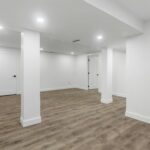
Turning an unfinished basement into a pool comes with challenges, but the result can be rewarding. Before taking the plunge (literally), weigh the pros and cons carefully – from cost and construction hassles to the priceless enjoyment of an at-home pool.
Cost Considerations: What Will a Basement Pool Cost?
Let’s talk dollars. As noted, basement pools are major projects, and you should have a clear understanding of the costs involved. Costs will vary greatly depending on your location, the size/type of pool, and your home’s existing conditions, but here are some rough estimates and factors:
- Installation Cost Range: For a basic basement pool (perhaps a small to mid-size concrete or fiberglass pool), expect to spend at least $50,000+ on the low end. More realistically, many projects land in the $75,000 to $150,000 range when all is said and done. High-end custom builds can go $200,000 and beyond. According to Fixr (a home improvement cost site), installing an interior in-ground pool averages $40,000 to $200,000. Why the huge range? It depends on the scope: a simple vinyl-lined pool might be on the lower end, whereas a large concrete pool with luxury finishes will be on the high end. Also, if your basement requires extensive excavation (digging deeper or expanding), that adds cost. Removing and disposing of tons of dirt from a basement is non-trivial – often it has to be conveyed out in buckets or via small conveyor systems, which is labor-intensive.
- Structural and Preparation Costs: Some chunk of your budget goes to preparing the basement before the pool even gets installed. This can include: reinforcing the foundation, relocating any plumbing or ductwork that are in the way, and possibly underpinning footings if you’re digging deeper. You may need to hire a structural engineer (a few thousand dollars for plans and oversight). If you have to bust up an existing concrete slab and pour a new thicker slab, that’s labor and concrete cost. Don’t forget the cost of building permits and inspections, which will certainly be required for such a project. Permits for pools, electrical, and structural work can total in the low thousands of dollars depending on local fees.
- Pool Shell and Equipment: The pool shell itself (whether it’s poured concrete, a fiberglass drop-in shell, or a vinyl liner system) will be a significant cost. Concrete pools are usually the most expensive but offer the most customization. Fiberglass shells are more affordable but you’re limited to sizes that can fit through your entry (unless you lift a shell in before constructing the house, which is rare). There are also stainless steel modular pool systems that can be assembled on site – these could be an option and may fall in a mid-price range. For equipment, you’ll need a pump and filtration system (couple thousand dollars), a pool heater (electric or gas heater, $1,000–$5,000 depending on type), and possibly a saltwater chlorine generator if you go saltwater. All these need to be installed with proper plumbing and wiring. An automatic cover system is highly recommended – those typically cost $10k-$20k, but you might find it worthwhile for safety and humidity control.
- Ventilation/Dehumidification System: As discussed, this is a must-have line item. Depending on what you choose, it could be as low as ~$5,000 for a powerful standalone dehumidifier + some vent fans, to $20,000+ for a custom engineered HVAC solution. Many contractors will integrate a ventilation system that exchanges air or a dedicated HVAC unit with a built-in dehumidifier. Whole-home systems (tying into existing HVAC) might run a few thousand dollars, but you risk burdening your home HVAC. Pool-specific units with refrigeration dehumidification are usually more effective but can be pricey. Factor this in early – it’s not optional, and it will take a noticeable share of the budget.
- Finishes and Accessories: The final cost depends on how you finish the space. High-end tile, elegant lighting, custom cabinetry for towels and equipment – all that will add to cost. Even something as simple as painting the ceiling with moisture-resistant paint, or adding an epoxy anti-slip coating to the floor, are costs to include. If you’re adding things like a hot tub (spa) adjacent to the pool, that could be another $10k or more. A sauna or steam room? Those too have their own costs (maybe $5k-$15k for a sauna kit plus installation). You can certainly keep finishes simple to save money – e.g., basic white waterproof panels on the walls and a standard pool liner – but many people splurge a bit to make the indoor pool a luxury space.
- Unexpected Costs: Plan a healthy contingency (at least 10-15%) for surprises. Common unforeseen expenses might include: upgrading your home’s electrical panel to handle the extra load of heaters and pumps, adding a larger hot water heater or boiler if you integrate the pool heating, fixing minor foundation issues discovered during work, or additional mold-proofing and insulation if during construction you realize you need it. Also, once the pool is up and running, some owners choose to add things like a security system or cameras in the pool room (so they can monitor remotely, e.g., if kids are near it) – not a huge cost but something people do.
To illustrate a scenario: suppose you plan a medium-sized basement pool that is 12 x 20 feet in size and 4-5 feet deep. It’s a concrete pool finished with basic plaster, with an automatic cover, and you need to install a new ventilation system. A rough breakdown might be: structural work & excavation $20k, pool shell $40k, equipment $10k, ventilation $10k, finishing materials $10k – that already sums to $90k. And that’s without any high-end luxury features. It’s easy to see how costs climb.
On the lower end, if you went with, say, an Endless Pool (which comes as a kit) in your basement, you might see costs like: pool kit $30k, site prep $5k, ventilation upgrades $5k – maybe around $40k total (plus your own labor if you help with assembly). This would be a more budget-friendly approach, relatively speaking. A hot tub installation in the basement might be even cheaper (a few thousand for the tub, a few thousand for ventilation, etc.), though that’s not the same as a swimming pool.
One potential silver lining: the Aqua Platinum Projects (UK pool builder) site mentions that an indoor space can be less expensive to operate than outdoor in some respects (less heat loss) and doesn’t require as many features like fencing or outdoor landscaping. So you might save on long-term heating costs or not needing to build a pool enclosure (since your house is the enclosure). But those savings might be marginal in the face of the overall investment.
Lastly, consider the impact on home value carefully. Spending $100k on a pool does not mean your house is worth $100k more. Some experts estimate a pool (outdoor) might add 5-8% to home value in some markets, but that is highly variable. An indoor pool’s value add is even more subjective. It could wow a specific buyer or might add nothing for someone who doesn’t want it. So do this for you, not for ROI.
Bottom line: Get detailed quotes and plan your budget thoroughly. Talk to contractors who have done basement pools before – they can often give you a ballpark based on similar projects. Be financially prepared not just for the build, but for the ongoing commitment. If the costs sound daunting, consider scaling back – maybe a smaller pool or a spa – to still get some benefit of water in your basement without breaking the bank.
Basement Pool FAQ
Can you really build a swimming pool in a basement?
Yes, you can install a swimming pool in a basement if the structure can support it and proper waterproofing and ventilation systems are included.
How much does it cost to put a pool in a basement?
Basement pool installation typically costs between $50,000 and $150,000 or more, depending on size, structure, ventilation, and custom finishes.
Do you need special permits for a basement pool?
Yes, basement pools usually require building permits, plumbing, electrical, and sometimes structural engineering approval based on local codes.
Is an indoor basement pool safe?
It can be safe if proper precautions are taken, including GFCI outlets, ventilation, pool covers, and restricted access to prevent accidents.
What kind of pool is best for a basement?
Compact options like Endless Pools, swim spas, or shallow in-ground pools are ideal for basements with space or ceiling height limitations.
How do you control humidity from a basement pool?
Install a dedicated dehumidification and ventilation system to prevent mold, condensation, and poor air quality from evaporating pool water.
Does a basement pool add value to your home?
It can add lifestyle value and appeal to luxury buyers, but resale value varies and doesn’t always recoup the full installation cost.
Can I convert my unfinished basement into a pool room?
Yes, but it requires major structural work, moisture protection, and often ceiling or floor modifications for proper installation and drainage.
What are the downsides of having a basement swimming pool?
High installation and maintenance costs, humidity control challenges, limited resale appeal, and space trade-offs are key drawbacks.
Conclusion
So, can you put a pool in your basement? Absolutely – it’s been done in many homes, and with the right planning and resources, you can create an amazing indoor swimming space. It offers unmatched convenience, privacy, and all-season fun. However, it’s not a project to dive into without doing your homework (pun intended!). The feasibility hinges on proper structural support, serious waterproofing, and dedicated climate control. Safety measures must be implemented diligently to protect your loved ones. And of course, the financial investment is substantial.
Before you commit, weigh the pros and cons for your situation. If you’re a homeowner who will truly use the pool often – for exercise, therapy, or family enjoyment – the daily benefits might make it well worth the cost and effort. There is something undeniably luxurious about having your own private pool steps away in your subterranean living space. Many basement pool owners describe it as turning an unused area into the best part of the house.
On the other hand, be realistic about the challenges. Ensure your home can handle the renovation. Talk to professionals and possibly get a structural assessment first. Get multiple quotes and maybe even consult others who have done it (to learn from their experiences). Consider starting with a smaller installation (like a swim spa) if you want to test the waters (another pun!) before going all in.
If you decide to move forward, assemble a great team – a reputable pool builder, structural engineer, and HVAC specialist are key players. Plan every detail from the drain placement to the ceiling paint. When executed correctly, a basement pool can be a source of joy, wellness, and increased home value. Done poorly, it could be a source of headaches. So plan, plan, plan – and then enjoy the heck out of your indoor pool if you build it!
Finally, keep in mind that adding a pool is one of the most advanced home improvement projects out there. It’s perfectly okay to conclude that it’s beyond your comfort level. There are plenty of simpler Basement DIY projects to tackle if you decide a pool isn’t feasible right now. But if you have the passion, budget, and commitment to make it happen, a basement swimming pool can truly transform your home life.
Happy swimming – and good luck with your basement pool journey!