
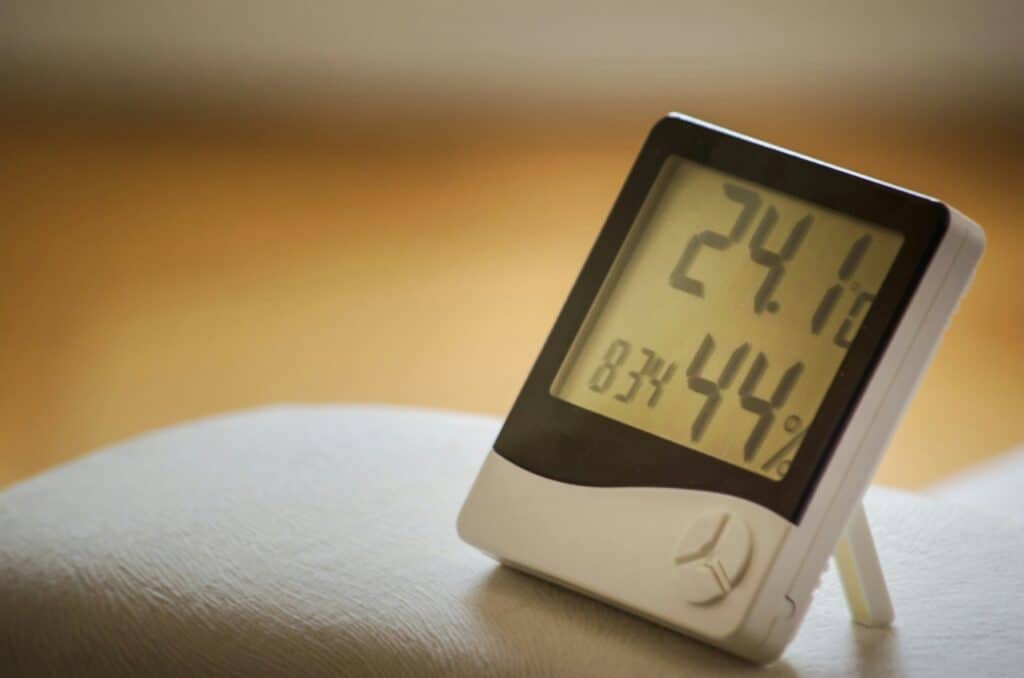
Basements naturally hold more moisture than the rest of your home. They sit below grade, have limited airflow, and are often the first place water intrusion shows up. When humidity levels creep too high—or drop too low—it doesn’t just affect comfort. It can trigger mold growth, encourage dust mites, worsen allergy symptoms, and even damage your home’s structure.
If you’ve ever wondered what humidity level your basement should be, you’re not alone. This guide breaks down the ideal basement humidity level, explains what happens when it’s too high or too low, and shows you how to keep moisture under control year-round—especially if allergies are a concern.
If your basement humidity consistently stays above this range, you’ll need to take active steps to lower basement humidity, including drainage fixes, airflow improvements, and dehumidification.
What Is the Ideal Basement Humidity Level?
For most homes, the ideal basement humidity level is between 40% and 50% relative humidity.
This range is low enough to:
- Discourage mold spores
- Limit dust mite survival
- Reduce musty odors
- Protect wood, drywall, and stored items
But it’s not so dry that it causes:
- Respiratory irritation
- Dry skin and sinuses
- Static electricity
- Cracking wood or finishes
Quick answer:
40–50% relative humidity is ideal for basements in most climates.
Why Basement Humidity Matters More Than You Think
Humidity isn’t just about comfort—it directly impacts indoor air quality and long-term home health. Excess basement humidity doesn’t just affect comfort — it directly impacts how well materials perform over time. High moisture levels can cause bubbling, peeling, and premature failure when painting concrete basement walls. Even the best paint for concrete basement walls can fail if moisture vapor is constantly pushing through porous concrete. Controlling humidity first is essential for long-lasting paint adhesion and mold resistance.
According to the EPA, indoor humidity above 60% creates ideal conditions for mold growth, while levels below 30% can irritate airways and dry out materials. The CDC also links mold exposure to respiratory symptoms, especially for people with allergies or asthma.
Basements amplify these risks because:
- Moisture seeps through concrete and masonry
- Cool temperatures slow evaporation
- Poor drainage traps water near the foundation
- Air circulation is often limited
If your basement humidity is off, the rest of your house often follows.
Ideal Basement Humidity for Allergies and Dust Mites
If allergies are a concern, humidity control becomes even more important.
Dust mites thrive at humidity levels above 50–55%. They absorb moisture directly from the air, so when humidity drops below 50%, their populations decline rapidly.
Best humidity range for allergy sufferers:
- 40–45%: Optimal for limiting dust mites and mold
- Below 35%: May feel too dry for some people
- Above 55%: High risk for allergens
Keeping your basement within this range can significantly reduce airborne irritants—especially when combined with proper filtration and ventilation.
What Happens If Basement Humidity Is Too High?
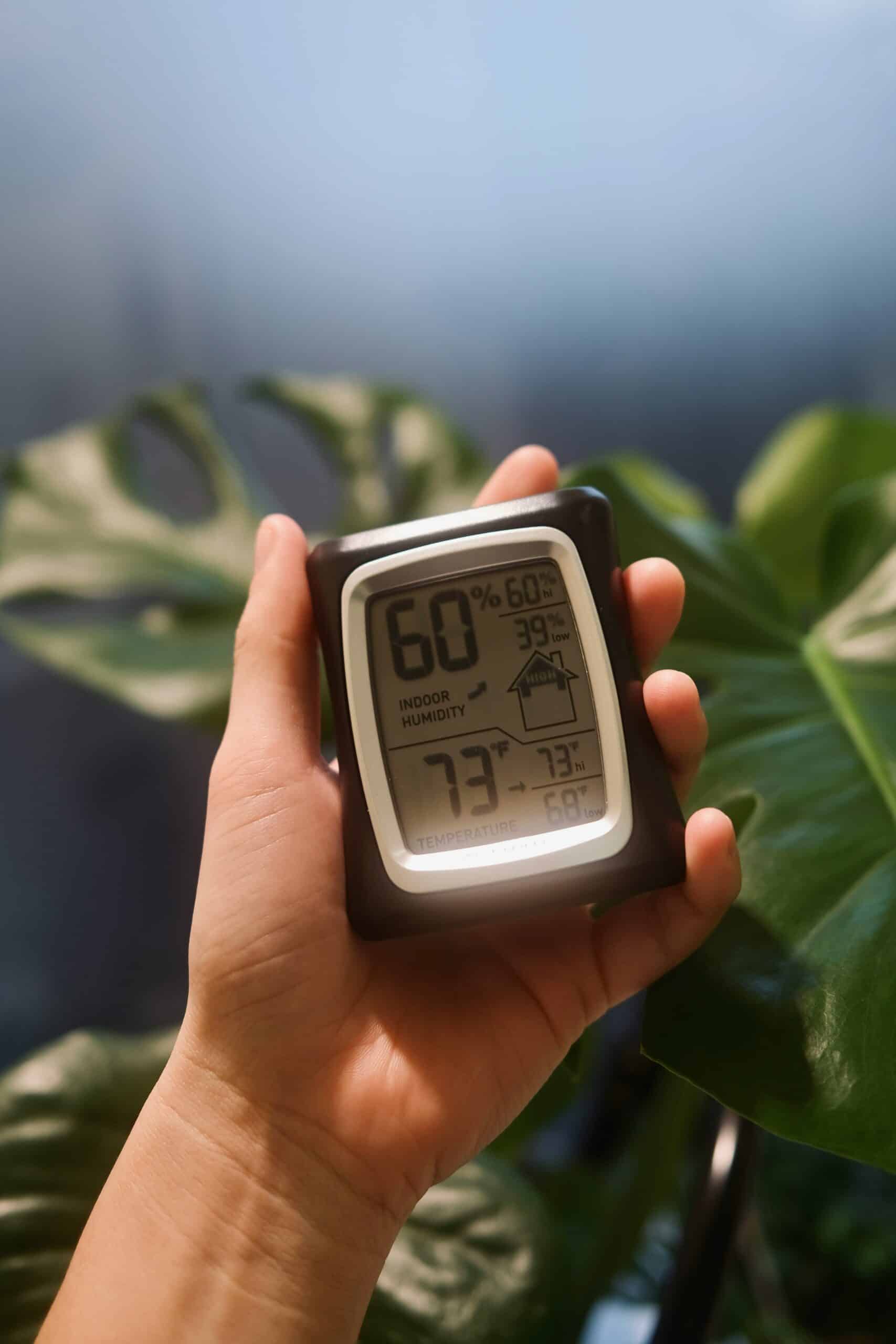
When basement humidity rises above 55–60%, problems tend to show up quickly.
Common signs of high basement humidity:
- Musty or earthy odors
- Condensation on walls or pipes
- Visible mold or mildew
- Peeling paint or bubbling finishes
- Increased allergy symptoms
- Damp carpets or cardboard boxes
Risks of high humidity:
- Mold colonization on walls, joists, and insulation
- Dust mite proliferation
- Wood rot and metal corrosion
- Damage to stored items and documents
- Long-term structural deterioration
High humidity is often a symptom, not the root cause. Standing water, clogged drains, or poor exterior grading can continuously feed moisture into the space. If water isn’t moving away from the foundation, humidity control becomes a losing battle — and over time, that trapped moisture can contribute to crumbling concrete basement floors and surface deterioration.
What Happens If Basement Humidity Is Too Low?
Low humidity is less common in basements, but it can happen—especially in winter or when dehumidifiers run constantly.
Signs of low basement humidity:
- Dry air irritation
- Cracked wood framing or trim
- Static electricity
- Shrinking or splitting materials
Risks of humidity below 30%:
- Increased respiratory irritation
- Dry skin and sinus discomfort
- Damage to wood finishes and flooring
This is why balance matters. The goal isn’t the lowest humidity possible—it’s stable, moderate humidity.
Ideal Basement Humidity by Season
Humidity needs change throughout the year. Treating summer and winter the same is a common mistake.
Ideal Basement Humidity in Summer
- Target range: 40–50%
- Warm outdoor air carries more moisture
- Condensation risk is higher
- Mold growth accelerates faster
In summer, dehumidifiers and proper drainage are essential. Basements often act like moisture sponges during humid months.
Ideal Basement Humidity in Winter
- Target range: 30–40%
- Cold air holds less moisture
- Over-drying becomes a risk
- Condensation still possible on cold surfaces
Running a dehumidifier aggressively in winter can push humidity too low. Many homeowners benefit from reducing run time or adjusting setpoints seasonally.
Humidity Levels and What They Mean
| Relative Humidity | What’s Happening | Risk Level |
|---|---|---|
| Below 30% | Air too dry | Discomfort, material damage |
| 30–40% | Slightly dry | Acceptable in winter |
| 40–50% | Ideal range | Best for basements |
| 50–60% | Elevated | Mold & dust mites possible |
| Above 60% | Too humid | High mold risk |
How Basement Moisture Starts
Humidity doesn’t appear out of nowhere. Common contributors include:
- Foundation seepage
- Poor yard grading
- Clogged or failing drainage systems
- Condensation from cold surfaces
- Inadequate ventilation
- Plumbing leaks
If water is pooling or slow-draining, humidity control alone won’t fix the problem. Addressing drainage issues early can prevent constant moisture buildup and reduce reliance on mechanical solutions.
How to Measure Basement Humidity Correctly
You can’t manage what you don’t measure.
Best tools:
- Digital hygrometers (cheap and accurate) – Like this BN-LINK Digital Hygrometer
- Smart dehumidifiers with built-in sensors
- Wi-Fi humidity monitors for trend tracking
Placement tips:
- Place sensors away from walls
- Avoid direct airflow from vents
- Measure at breathing height
Track humidity over several days to understand patterns—not just single readings.
How to Lower Basement Humidity Safely
Lowering humidity should be layered, not forced.
Step 1: Stop the Moisture Source
- Repair drainage problems
- Seal foundation cracks
- Address standing water
- Improve exterior water flow
Step 2: Improve Air Movement
- Increase airflow
- Avoid blocking vents
- Use fans strategically
Step 3: Control Humidity Mechanically
A properly sized dehumidifier is often the most effective tool—especially in damp basements. If humidity remains high despite fixing drainage and airflow issues, a properly sized dehumidifier is often the most effective solution—especially for homes with allergy concerns. Our in-depth guide, Best Dehumidifier for Allergies, explains which features matter most for controlling moisture, mold, and dust mites in basements.
Preventing Humidity Problems Long-Term
Humidity control isn’t a one-time fix.
Smart prevention strategies:
- Keep humidity between 40–50%
- Clean and maintain dehumidifiers
- Inspect drains and sump systems regularly
- Seal porous concrete surfaces
- Use moisture-resistant finishes
For finished or partially finished basements, using the right coatings matters. Articles like Best Paint for Concrete Basement Walls cover how moisture-resistant paints can help stabilize humidity and protect surfaces.
Basement Humidity and Mold Growth
Mold needs three things:
- Moisture
- Organic material
- Time
Basements often supply all three. According to the EPA, keeping humidity below 60%—ideally below 50%—is one of the most effective mold-prevention strategies in enclosed spaces.
Once mold establishes itself, remediation becomes far more expensive than prevention.
How Humidity Affects the Rest of Your Home
Basement air doesn’t stay in the basement.
- Stack effect pulls air upward
- Moist air spreads to upper floors
- Odors and allergens travel through ductwork
- Whole-house air quality suffers
Controlling basement humidity often improves comfort throughout the entire home.
Common Basement Humidity Mistakes
- Setting dehumidifiers too low
- Ignoring seasonal adjustments
- Treating symptoms instead of moisture sources
- Blocking airflow around equipment
- Forgetting regular maintenance
Humidity control works best when it’s consistent and intentional, not reactive.
Dehumidifier FAQs
What humidity should my basement be?
Most basements should stay between 40–50% relative humidity year-round.
Is 60% humidity too high for a basement?
Yes. Humidity above 60% significantly increases the risk of mold growth and dust mites.
Does basement humidity affect dust mites?
Absolutely. Dust mites thrive in humid environments. Keeping humidity below 50% makes survival difficult.
Is 30% humidity too low for a basement?
It can be, especially long-term. While acceptable in winter, consistently low humidity may cause discomfort and material damage.
Should basement humidity change by season?
Yes. Slightly lower in winter (30–40%) and higher in summer (40–50%) is normal and healthy.
Can basement humidity cause health problems?
According to the CDC, excess indoor moisture can worsen allergies, asthma, and respiratory symptoms—especially when mold is present.
When Humidity Control Isn’t Enough
If your basement humidity keeps returning despite dehumidifiers and ventilation, there may be an underlying drainage or water intrusion issue. Articles like Basement Drain Clogged explain how water management failures can drive persistent humidity problems.
Fixing the root cause is often the most cost-effective solution long-term.
Final Steps for Humidity
Maintaining the ideal basement humidity level is one of the most important—and overlooked—steps in protecting your home and your health. By keeping humidity between 40–50%, you can reduce mold growth, limit dust mites, improve indoor air quality, and create a more comfortable living environment.
Humidity control works best when it’s proactive, balanced, and paired with proper drainage and maintenance. Once moisture is under control, finishing or upgrading your basement becomes safer.




Pingback: Best Dehumidifier for Allergies (2026) – Reduce Mold & Dust Mites
Pingback: How to Fix a Clogged Basement Drain Fast (Step-by-Step)
Pingback: How to Lower Basement Humidity (Causes & Fixes)
Pingback: Best Paint for Concrete Basement Walls (Waterproofing Guide)
Pingback: Can You Paint Basement Walls If They’re Damp?
Pingback: How Long Should Basement Walls Dry Before Painting?
Pingback: When Do You Need a Crawl Space Dehumidifier? Signs It’s Time to Upgrade
Pingback: What Does a Wood Moisture Meter Do? How to Check for Damp Wood
Good post however , I was wondering if you could write a litte more on this
subject? I’d be very thankful if you could elaborate a little bit more.
Cheers!