
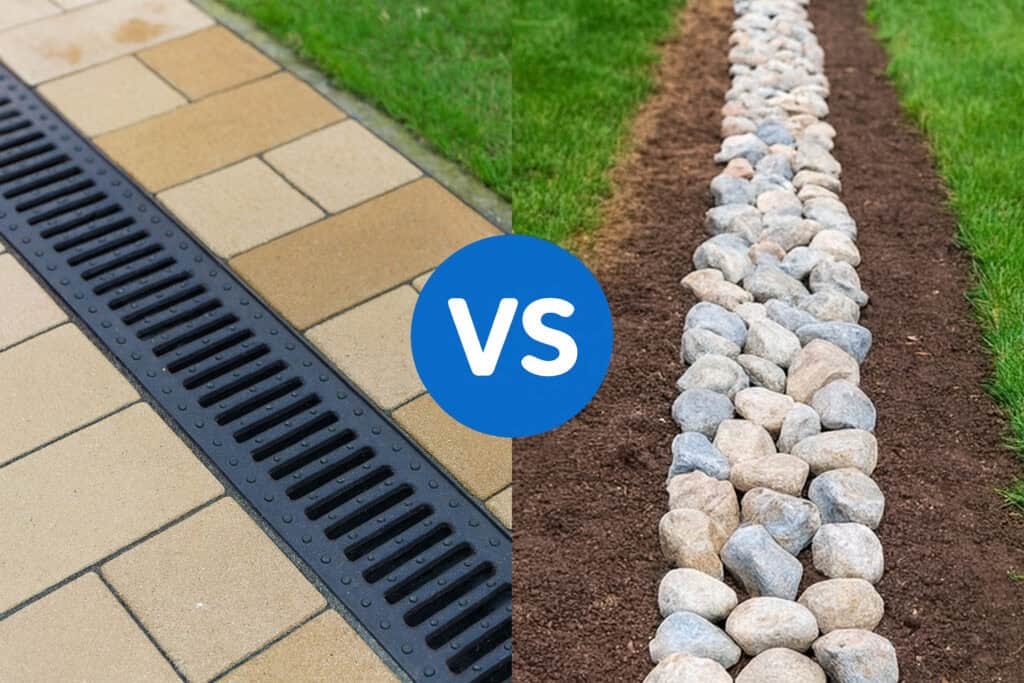
If your lawn turns into a pond after rain or water keeps pooling along your driveway, you’re not alone. Many homeowners struggle with excess water and poor yard drainage. Two popular fixes are French drains and channel drains. Both systems move water away from problem areas, but they work in very different ways. So, which is better for yard drainage – a French drain or a channel drain? The answer depends on your property’s needs, where the water is collecting, and how much maintenance you’re willing to do. In this friendly guide, we’ll explain what each drain is, compare their pros and cons, and help you decide the best drainage solution to keep your yard dry and your home safe.
Why Proper Yard Drainage Matters: Excess water isn’t just a nuisance – it can damage your landscape and even your house. Standing water on grass can kill your lawn and attract pests, while runoff streaming toward your foundation can lead to basement leaks or soil erosion around the foundation. Good drainage systems protect your home’s structure by channeling water away before it causes cracks, mold, or erosion in the soil supporting your foundation. In short, fixing drainage issues now can save you from costly repairs later.
Let’s dive into the differences between French drain vs channel drain systems and figure out which one (or both!) you might need for your yard.
What Is a French Drain?
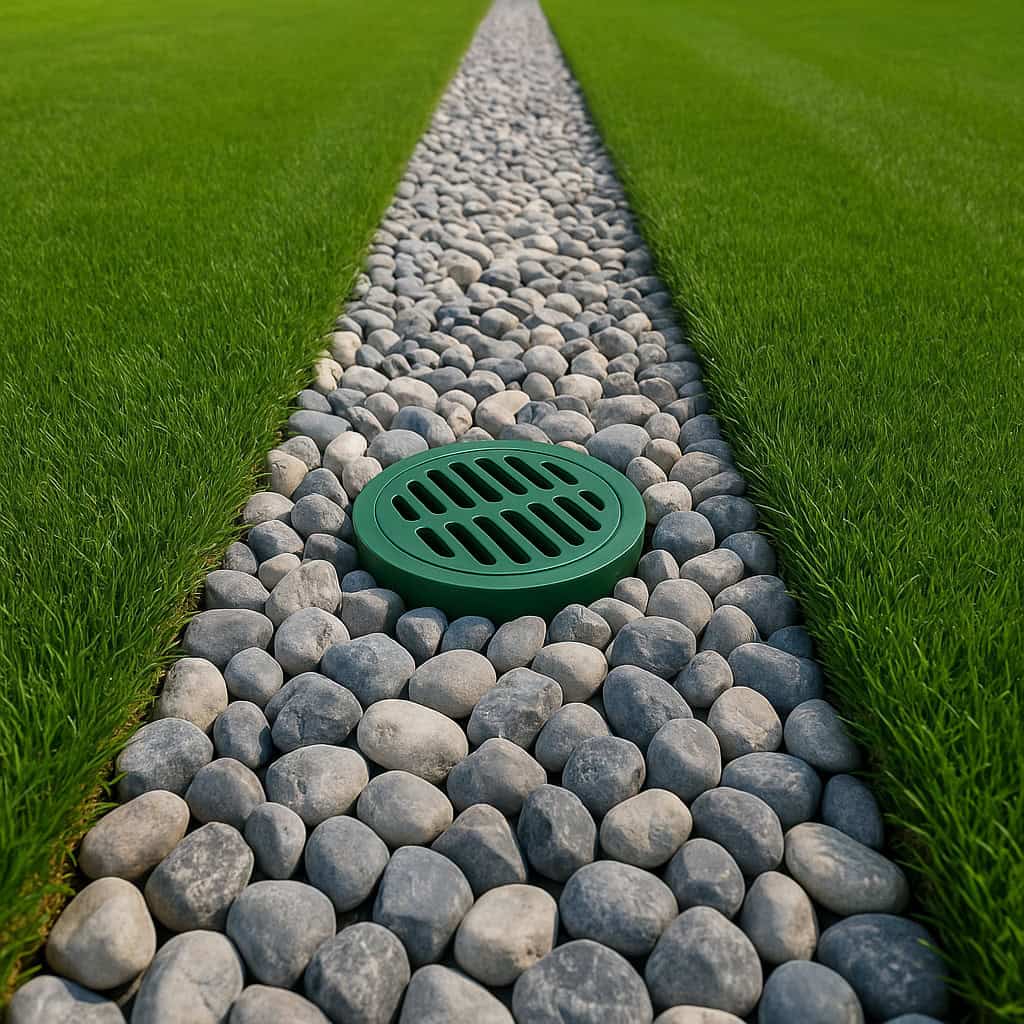
A French drain is an underground drainage system used to collect and redirect water that has soaked into the soil. It typically consists of a trench filled with gravel and a perforated pipe that carries water away from areas where it tends to gather. In plain terms, a French drain gives excess groundwater an easy path to flow out of your yard. As water seeps through the gravel, it enters the pipe and is channeled to a safe discharge point (such as a lower area of your property, a drainage ditch, or a dry well) away from your house.
Where/When to Use: French drains are ideal for yards that stay soggy after rain, places where water pools in the lawn, or around foundations and basements prone to leaks. For example, if you have a low spot in the backyard that remains marshy days after a storm, a French drain can help dry it out by draining subsurface water. They’re also commonly installed along the base of home foundations or behind retaining walls to relieve water pressure and prevent moisture from seeping inside. Essentially, whenever the groundwater is causing issues – not just obvious surface puddles – a French drain is often the go-to solution.
Design and Appearance: One big advantage of French drains is that they’re hidden once installed. The trench is backfilled with gravel (and often topped with a layer of soil or sod), so you might only see a strip of gravel or a slight depression in the lawn after completion. This minimally invasive look means a French drain can blend into your landscaping. In fact, many homeowners appreciate that a French drain quietly does its job underground without ugly pipes or grates visible in the yard. You can even grow grass over certain types of French drains, making them virtually invisible.
How It Works: A French drain intercepts water as it moves through the soil. Think of it like an underground gutter for your yard’s groundwater. When the surrounding soil becomes saturated, water naturally finds the path of least resistance – the French drain’s gravel bed – and flows into the perforated pipe, which carries it away. This makes French drains very effective for reducing that squishy, waterlogged ground that occurs with a high water table or poor natural percolation (like in clay-heavy soil). By draining water below the surface, French drains keep your yard drier and help protect structures. For instance, a properly installed French drain along your foundation will catch water before it seeps into the basement, preventing flooding and foundation damage.
Installation Basics: To install a French drain, you (or your contractor) will dig a trench that slopes downhill from the wet area to the discharge point (a slope of about 1% is often recommended). A permeable landscaping fabric is usually laid in the trench to keep soil from clogging the pipe. Then a layer of gravel is added, followed by a perforated drain pipe (commonly 4-inch diameter PVC or corrugated plastic) placed along the bottom. More gravel is filled in around and above the pipe, and the assembly is wrapped in the fabric like a burrito to filter out dirt. Finally, you cover the trench with topsoil and sod or with decorative rocks on top of the gravel, depending on your preference. After installation, only the ends of the drain (where water enters or exits) might be noticeable. Most French drains rely on gravity, so the end of the pipe needs to daylight at a lower point or into a basin. If your yard is very flat, you may need to connect the French drain to a sump pump system to lift water out. (Gravity is free, but it only works if you have a downhill outlet!)
Maintenance: French drains are relatively low-maintenance since they are buried, but they aren’t completely “set and forget.” Over many years, sediment can build up in the pipe or gravel. Using a filter fabric (geotextile wrap) greatly reduces clogging by keeping out soil particles. It’s wise to check the outlet occasionally to ensure water is flowing freely (no dirt or tree roots blocking it). If you notice the drain isn’t working (areas stay flooded), the pipe might need flushing out, which can be done with a garden hose or plumbing snake. In the worst case of a stubborn clog or collapse, a portion of the drain might have to be dug up and repaired – but a properly installed French drain can function for decades before that’s ever an issue. (Some estimates say a French drain can last 30+ years with good maintenance.) To avoid future headaches, professionals recommend wrapping the drain pipe in fabric and using plenty of coarse washed gravel, especially in clay soils, so that fine particles don’t infiltrate and clog the system.
What Is a Channel Drain?
A channel drain (also called a trench drain) is a surface drainage system designed to collect runoff water above ground and quickly send it away through a narrow channel. You’ve probably seen channel drains as the long grates across driveways or along the edge of a pool deck. In simple terms, a channel drain is like a gutter installed flush with the ground: it “catches” water flowing over the surface and directs it into a pipe underground. These drains are typically made of a U-shaped channel (plastic, concrete, or metal) covered by a removable metal or plastic grate. Water falls into the channel through the grate, then flows through the channel to an outlet pipe that leads to a safe discharge area (storm sewer, swale, or other drainage point).
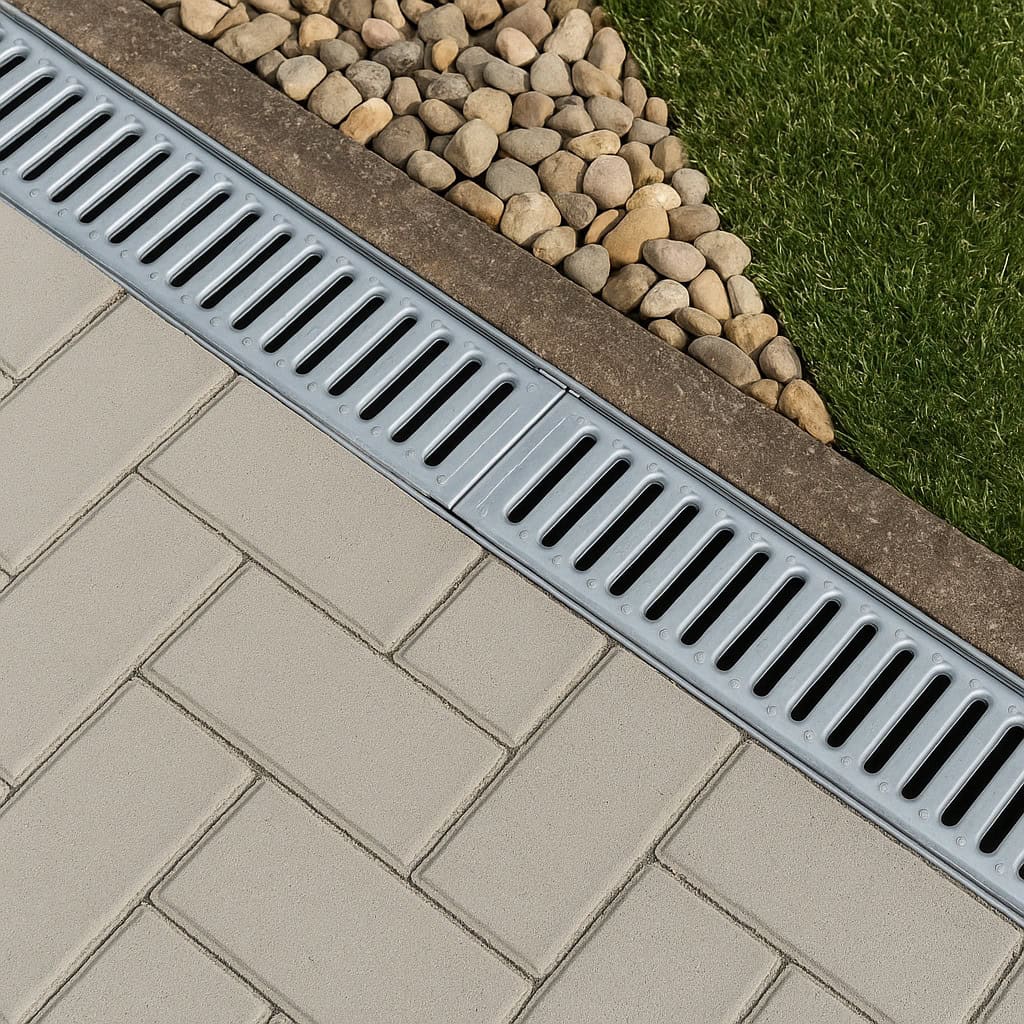
Where/When to Use: Channel drains are best for managing surface water in specific spots. Common uses include: across the bottom of a sloping driveway (to stop water from rushing into your garage), along the edge of a patio or sidewalk that collects water, in front of a garage door or shed entrance, around swimming pool decks (to drain splash water), or any paved area where water tends to puddle. For instance, if heavy rain creates a sheet of water flowing toward your house’s garage, a channel drain set into the driveway can intercept that water like a moat, and carry it off before it reaches your garage floor. These drains are also popular along walkways, concrete patios, or at the low end of a sloped yard where water accumulates. In short, whenever the water problem is happening on the surface (and especially on hard surfaces), a channel drain is a strong solution.
Design and Appearance: Channel drains are visible by nature – you will see a stripe or line (the grate) on the ground where the drain runs. Some homeowners worry this might be an eyesore, but modern channel drain kits offer decorative grates in various styles (black plastic, stainless steel, brass, even faux wood-look grates) that can blend into or complement your hardscape. For example, this NDS Pro Series Channel Drain Kit on Amazon. When installed properly, a channel drain sits level with the surrounding surface, so lawn mowers or cars can go over it without trouble. The grate is there for safety and to keep out large debris. Channel drains can actually look quite neat and intentional – picture a slim linear grate along your driveway that actually adds a bit of accent. Still, compared to a completely hidden French drain, channel drains are an exposed solution. You’ll want to place them thoughtfully so they don’t disrupt the look of your landscape. For example, along a patio edge or at the transition between your driveway and garage, a channel drain can “blend into its surroundings” when chosen and installed with aesthetics in mind.
How It Works: Channel drains work by capturing water at the surface the moment it starts pooling. Imagine water flowing across your concrete patio – as soon as it reaches the channel drain grate, it falls in and is carried through the underground pipe away from the patio. This prevents large puddles from forming on flat surfaces and eliminates runoff flowing uncontrolled. By removing water fast, channel drains help prevent slip hazards (no one likes a big icy puddle in winter) and keep water from seeping into unwanted places (like under your slabs or into your building). In essence, a channel drain is all about high-capacity, immediate drainage for runoff. They are very effective in heavy downpours when a lot of water hits the ground at once and needs a quick escape route. However, note that channel drains do not address groundwater – if your soil beneath is saturated, a channel drain by itself won’t dry it out, since it only collects water on top of the ground. This is why channel drains are often used in combination with other drainage methods for comprehensive solutions.
Installation Basics: Installing a channel drain usually involves cutting a long narrow trench at the low point of the surface you want to drain. For example, across a driveway you might saw-cut a straight line, remove a strip of concrete or pavers, and dig a shallow trench to set the channel. The preformed channel pieces (often 3 to 6 inches wide, and coming in 3 or 4 foot sections) are placed in the trench on a bed of concrete or packed sand to keep them stable. They have a slight slope built-in or are tilted to help water flow. The channels connect end-to-end for the length you need, and then attach to a drain pipe (usually at the end or bottom) that carries water out to your discharge point. Once the channel is in place and leveled correctly, concrete is poured or soil packed around it to secure it, and the grate is snapped on top. Some DIY plastic channel drain kits can be installed by homeowners for light-duty areas (like at a patio edge) by digging and backfilling with concrete around them. More heavy-duty channel drains (for driveways that handle car weight) may require professional installation to ensure they’re well-supported and won’t crack under pressure. It’s crucial that a channel drain be level with the ground and properly sloped internally; otherwise water will either not enter, or will sit in the channel. After installation, you’ll see the linear grate flush with the surface – that’s it.
Maintenance: Compared to French drains, channel drains require a bit more frequent TLC. Because the channel and grate are exposed, leaves, dirt, and debris can collect in them relatively quickly. The good news is maintenance is straightforward: you periodically remove the grate (most snap out or have a couple screws) and scoop or hose out any debris inside. If you keep up with occasional cleaning – especially after autumn leaf fall or a big storm – your channel drain will continue flowing freely. Many homeowners just make it a habit to inspect their channel drains every few months. Clogged channel drains can overflow (defeating their purpose), so this is an important task. Also, if you notice slow drainage, check the outlet of the drain pipe for clogs. In winter, packed snow and ice can also block a channel drain; using a safe de-icer or warm water can clear it (never use sharp metal tools that could damage the grate). One advantage here is you can see any issues at a glance – if the grate is covered or the channel is filled with gunk, you’ll know it’s time to clean (unlike a French drain where problems stay hidden until big trouble). Lastly, the grate and channel should be checked for damage. Plastic channel sections can sometimes crack (due to heavy vehicles or freeze-thaw cycles), and metal grates can bend or rust over many years. Replacing a segment or grate is usually not too difficult – many manufacturers sell replacements – but it’s something to be aware of. Overall, channel drains are easy to maintain with simple tools, but they do need regular inspection and cleaning to work their best.
French Drain vs Channel Drain: Key Differences
Both French and channel drains can improve yard drainage, but they have distinct roles. Here’s a quick comparison of the key differences between the two systems:
- Above vs. Below Ground: A French drain is buried below the surface, invisible once installed, while a channel drain is an exposed surface system (a visible grated channel in the ground). French drains hide under soil or gravel, whereas channel drains sit at ground level with a grate on top.
- Type of Water Handled: French drains deal with subsurface water – they relieve waterlogged soil and manage groundwater that causes soggy areas. Channel drains, on the other hand, remove surface water – they’re designed to catch and carry away water that’s flowing or pooling on top of driveways, patios, or low spots. In short, French = groundwater and Channel = runoff.
- Best Applications: French drains are best for open yard areas that stay wet, around foundations to keep water out of basements, along property lines or slopes to intercept runoff, and any spot where you want to dry out the ground. Channel drains excel near hard surfaces – across sloping driveways, along garage entrances, around pool decks, patios, walkways, or at the bottom of outdoor stairs. If water is invading your lawn or foundation, think French drain; if water is streaming over pavement, think channel drain.
- Construction: A French drain is essentially a gravel trench with a perforated pipe deep in the ground, often wrapped in filter fabric and then covered over with grass or stone. A channel drain is a shallow trench containing a manufactured channel (typically plastic or concrete) with a metal or plastic grate on top, tied into a drain pipe. French drains usually require digging 1–2 feet (or more) deep and 6+ inches wide, whereas channel drains are a few inches wide and are set just below the surface grade.
- Aesthetics: Once it’s in, a French drain is virtually invisible, preserving your yard’s appearance. Channel drains leave a visible grate line, which can be a design feature or a slight visual interruption depending on your perspective. Some homeowners don’t mind or even like the look of a neatly installed channel drain, but others prefer the hidden nature of a French drain.
- Flow Capacity: Channel drains can whisk away large volumes of surface water very quickly, since water doesn’t have to soak in – it goes straight into the channel. French drains work more gradually, relying on water soaking through soil/gravel; they can handle moderate flow over time but might be overwhelmed by sudden heavy downpours on the surface (until that water percolates down to them). For example, a channel drain can rapidly drain a driveway during a thunderstorm, while a French drain excels at drying out a lawn over a day or two after the rain.
- Clogging & Maintenance: Channel drains are prone to clogging from leaves, dirt, and debris entering the grate – they require more frequent cleaning and inspection to keep clear. French drains, being buried, won’t clog with surface debris, but can clog underground over years from sediment or tree roots; they might need an occasional flush and, in worst cases, excavating to fix. In short, channel drains demand visible upkeep (but easy to do), while French drains demand hidden upkeep (rare but more involved if needed).
- Longevity: Both types can last a long time if well maintained. However, the prefabricated materials in a channel drain (especially plastic ones) might break down or get damaged sooner from traffic or UV exposure – some sources note trench/channel drains might fail in 5–10 years if not high quality. A properly installed French drain (with good gravel and fabric) has no moving parts and can last 20-30+ years before needing significant maintenance. In practice, lifespan varies, but French drains often edge out in durability since they’re protected underground.
- Installation Effort: Installing a French drain generally involves more digging and landscape disturbance (especially for long drains across a yard). Channel drains, while needing precise work (cutting a driveway or trenching along a patio), localize the disruption to a narrow trench and often involve pouring some concrete to secure the channel. Neither is trivial to install DIY, but French drains usually require heavier labor (and possibly machinery for long trenches) while channel drains require careful finish work (so that the grate sits correctly in your concrete or pavement). However, check out this article by This Old House for additional information.
In summary, French drains vs channel drains differ mainly in what water they collect and where they are placed: French drains quietly handle groundwater below ground, and channel drains visibly handle runoff above ground. Many properties actually utilize both in different areas, which we’ll discuss later. First, let’s weigh the pros and cons of each system in more detail.
Pros and Cons of French Drains
Like any solution, French drains have their advantages and drawbacks. Let’s break them down:
Pros of French Drains:
- Effective Groundwater Management: Excellent for relieving persistently wet, waterlogged soil. French drains are a practical solution for groundwater issues, ideal for areas where the soil is always damp or a high water table keeps the ground squishy. By draining subsurface water, they prevent that marshy lawn syndrome and reduce standing water that can kill grass or plants.
- Prevents Basement Flooding: Commonly used around foundations to keep water out of basements and crawl spaces. A French drain along your foundation or under the basement floor will intercept water and prevent seepage into your home – a big plus for protecting your basement from floods or mold.
- Hidden & Landscaping-Friendly: Once installed, a French drain is buried and can be covered with grass or decorative rock, making it virtually invisible in your yard. You don’t have to sacrifice aesthetics for function. You can mow right over it if it’s turfed over, and it keeps the yard looking natural and open.
- Large Coverage & Versatility: French drains can be as long as needed and placed in various configurations (e.g., circling a house, crisscrossing a yard, or outlining a garden). They are great for protecting large areas – you can run a French drain across a broad low section of your property to collect diffuse water over a distance. They also work on hillsides to catch downhill seepage. This versatility means one French drain system can often solve multiple issues at once (groundwater and minor surface water) over a wide zone.
- Long-Term Solution: With proper installation, a French drain can last for decades. The system is simple (just pipe and gravel), so there’s not much to wear out. Use of geotextile fabric and good gravel can ensure the drain doesn’t clog easily, meaning minimal intervention is needed for many years. Many homeowners find that after putting one in, their water problems are solved for the foreseeable future – a well-built French drain quietly keeps working every rainy season with little fuss.
Cons of French Drains:
- Disruptive Installation: Putting in a French drain means digging a long trench through your yard. This can tear up your lawn or garden beds in the short term. If you have established landscaping, it’s often tricky – sometimes you have to remove and replant sections of sod, move shrubs, or even cut under walkways to lay the pipe. It’s a labor-intensive project (often requiring a backhoe or trenching machine), which is why French drains can be costly to have professionally installed.
- Buried (Hard to Access): “Out of sight, out of mind” is great until something goes wrong. Since French drains are buried, a clog or collapse is not immediately obvious and can be hard to locate. Fixing or upgrading a French drain usually means digging it up. For example, if tree roots invade the perforated pipe or sediment builds up over years, you might have to excavate sections of the drain to repair it. This is messy and can undo some of your beautiful lawn again. So while day-to-day a French drain is low maintenance, any major service is a bigger job.
- Not Ideal for Sudden Heavy Surface Runoff: If you have fast-moving surface water or large puddles forming immediately during a storm, a French drain isn’t the quickest solution. Water has to percolate down through the soil or gravel to reach the pipe. In a torrential downpour, you might still see puddling until the water finds the drain. In contrast, a surface drain (like a channel or catch basin) might handle the immediate deluge better by giving water an instant entry point. In practice, French drains can be overwhelmed by very heavy rain in a short period, especially if the soil is clay and doesn’t let water through quickly. They excel more at long-term drainage (e.g., keeping the yard from staying wet days after the rain) than at instant removal of big puddles.
- Requires Proper Slope (Gravity fed): A French drain must slope downward toward its outlet. If your property is completely flat or low-lying, installing one can be tricky – you might not have anywhere for the water to go by gravity. Without enough slope, water will just sit in the pipe. You can mitigate this by pumping water out (sump pump) or tying into a storm drain if allowed, but those add complexity. Channel drains have a similar requirement for outflow, but because they’re often shorter runs, it’s easier to get a slope on them in a given spot. For a French drain stretching across a yard, you’ll need to plan the grading carefully. If you don’t have the elevation drop, a French drain may not work effectively.
Pros and Cons of Channel Drains
Now let’s consider the channel (trench) drains and their benefits and drawbacks for yard drainage:
Pros of Channel Drains:
- Rapid Surface Water Removal: Channel drains are champions at collecting high volumes of runoff quickly. The long grated opening can swallow a lot of water in a short time, which is why they’re perfect for preventing floods on impervious surfaces. For example, one well-placed channel drain can stop an entire driveway’s worth of rainwater from rushing into your garage. If you regularly see big puddles or sheets of water during storms, a channel drain will get that water off the surface almost immediately. This quick action also helps reduce slip hazards (no more slick algae on a perpetually wet patio, or ice patches where water refreezes in winter).
- Protects Structures and Landscaping: By intercepting and redirecting water, channel drains help prevent soil washouts and erosion in your yard. Rather than water spilling over a sidewalk into a flower bed (and gouging out soil), a channel drain can carry it to a controlled exit point. For instance, channel drains can send driveway runoff to a reinforced drainage area or pipe, so you don’t end up with ruts in your lawn. This keeps your yard and foundation drier and safer. In essence, channel drains act like mini levees, protecting specific zones from getting drenched.
- Targeted and Efficient: Channel drains are great when you know a specific trouble spot that needs drainage. They allow you to focus on that low point. Unlike installing a whole French drain network, you might just need a 10-foot channel drain across a threshold to solve a water problem. This can be more efficient in some cases. Also, channels force water to go where you want – you can “draw a line” that water won’t cross. Homeowners often use them at the boundary between a paved area and the house or garden. This way, all water on the hard surface gets collected before it can overflow to unwanted places.
- Relatively Easy Maintenance: Maintaining a channel drain is straightforward. Cleaning is simple – pop off the grate and remove debris. You don’t need any special equipment, and you can visually inspect the drain anytime. Because of this, many people find it easier to keep a channel drain functioning at full capacity; you’re unlikely to be surprised by a hidden problem. Regular sweeping of the area or occasional flush with a hose is usually all it takes to keep things clear.
- Installation Can Be Localized: While any drain installation is work, putting in a short channel drain across an existing concrete pad or driveway often involves less total digging than a long French drain through a lawn. Contractors can cut a narrow trench just where needed, rather than trenching throughout the yard. For homeowners comfortable with concrete work, small channel drain kits are available that make it possible to DIY certain installations (for example, in a paver walkway) without tearing up large areas of the property. In other words, channel drains can sometimes be added as a surgical fix to an isolated problem spot, which might be quicker than re-grading or installing yard-wide solutions.
Cons of Channel Drains:
- Visible Grates (Aesthetic and Safety): The flip side of being accessible is that channel drains are noticeable features in your landscape. Some people don’t love the look of a long metal or plastic strip running across their beautiful driveway or patio. Beyond looks, the grate can be a minor tripping hazard if not installed flush and if someone is not expecting a groove there (high heels or bicycle wheels, for example, should be cautious). However, good installation and choosing a low-profile grate design usually mitigate these issues. It’s worth noting that many channel drains in residential settings are in low-traffic areas (e.g., at driveway end where you don’t walk much). Still, if a seamless look is a top priority, you might view the visible grate as a downside compared to invisible French drains.
- Frequent Debris Buildup: Because the channel is open at the top, leaves, twigs, and dirt will get in regularly, especially if placed near trees or gardens. This means channel drains need regular cleaning to function well. Ignoring maintenance can lead to clogs, bad odors from trapped water/debris, or even mosquito breeding in standing water within the channel. In climates with autumn leaf fall, you might be clearing the grate quite often. If you’re the type of homeowner who doesn’t want to think about your drainage system much, this could be a nuisance. (By contrast, a French drain won’t fill with leaves – though it can clog with sediment over time, it’s not a day-to-day concern.)
- Material Durability: Not all channel drains are created equal. The cheaper plastic channel drain kits you find for DIY can be prone to cracking or breaking under stress – say, the weight of a vehicle or the impact of a snow shovel. Even sturdy ones can get damaged: metal grates can bend if a heavy object hits them, and plastic grates can become brittle after years of sun exposure. If the channel itself cracks or the grate fails, you may have to replace that section of the system. Repair often means cutting out the old channel and putting a new one in with fresh concrete, which is not trivial. To mitigate this, invest in a high-quality channel drain (e.g., concrete or heavy-duty PVC with a strong grate) appropriate for the load it will bear. Proper installation (fully supporting the channel with concrete on all sides) also prevents collapse. It’s a con to consider: you get what you pay for with channel drains – the very affordable ones might not last long.
- Requires Managed Outflow: A channel drain simply relocates water; you still need to send that water somewhere safe. If the drain outlet is not well-planned, the fast outflow can cause erosion or flooding wherever it exits[41]. For instance, if you dump the water at the end of the drain onto bare soil, you might create a new washout gully. So you often need to connect the channel to a solid drain pipe leading to a proper discharge (storm drain, curb, dry well, etc.), or at least dissipate the water in a rocked area. This adds a bit of complexity/cost and needs to be monitored. It’s important to ensure the end of the line is reinforced or safely disposed, especially in heavy rains. A channel drain without a good outlet solution can just move the problem downstream.
- Surface-Only Solution: As mentioned, channel drains do nothing for groundwater issues. If your yard soil doesn’t drain well (say you have clay soil that stays waterlogged), a channel drain might cure the symptom (surface puddles) in one spot but not the underlying issue. Water could still saturate the ground around it. So, if you have widespread drainage problems, you might still need a French drain or other yard drainage methods in addition to any channel drains. Channel drains are best thought of as one component in an overall drainage strategy – particularly targeted at hardscape runoff. They are not a magic bullet for all drainage concerns.
Installation, Cost, and DIY Considerations
When deciding between a French drain and a channel drain, it helps to also consider installation practicalities and cost. Your budget, DIY inclination, and long-term plans might sway your choice.
- Cost Differences: In general, French drains involve more digging but use cheaper materials (gravel and perforated pipe), while channel drains involve expensive prefabricated channels/grates but less extensive digging. On a per-foot basis, a French drain is often less expensive. Estimates vary, but one source indicates French drains cost about $10 to $50 per linear foot to install, whereas a trench/channel drain can range from $30 to $150 per linear foot. For example, if you need a 50-foot drain, a French drain might be a few thousand dollars, while a channel drain of the same length (with commercial-grade grates) could cost significantly more in materials and labor. Of course, actual costs depend on local labor rates, the depth/width of trench needed, and any complications (like rerouting sprinklers or removing old concrete). If you hire a contractor, French drains might rack up labor hours for trenching, whereas channel drains might rack up material costs for the channel assemblies. It’s wise to get quotes for both options if you’re undecided – sometimes the price difference isn’t huge for a small project, but for larger areas French drains tend to be more cost-effective for the coverage you get.
- DIY Friendliness: Are you a handy homeowner? Small-scale projects of either type can be DIY’d, but overall French drains are a bit more DIY-friendly for a yard project. You need basic tools (shovels, maybe a rented trencher), and the concept is straightforward: dig trench, lay fabric, gravel, pipe, more gravel, cover up. It’s hard work, but not highly technical. Channel drains, in contrast, require working with concrete or cutting into existing structures, precise leveling, and ensuring alignment of channel sections – tasks that might be challenging if you’re not experienced with masonry or slab work. A wrong slope on a channel drain could cause water to pool or the channel to crack. That said, if you’re comfortable pouring concrete or mortar, you can buy channel drain kits and install short runs (like across a driveway entrance). Some kits come with everything needed, including the channel pieces, end outlet, and even a shallow drain pipe. French drain pipe kits are also available – these might include perforated pipe already encased in a foam peanuts or fabric sleeve (eliminating the need for gravel in some DIY applications). These “no-gravel” French drain kits can simply be buried in a trench and are popular for quick fixes, although traditional gravel French drains tend to last longer. If you do it yourself, remember to call utility locators before digging and plan the slope carefully. For channel drains, be prepared to mix concrete and have an extra set of hands to get the channels level as the concrete sets.
- Kits and Products: For homeowners looking to tackle the job, many home improvement stores sell French drain kits and channel drain systems you can buy off the shelf. For example, you can find French drain bundles that include a corrugated perforated pipe with a pre-wrapped filter sock (to keep dirt out) and lightweight drainage gravel substitutes – these kits are useful for landscaping areas or garden beds where you don’t want to haul tons of gravel. There are also modular channel drain kits (often 5-inch wide channels) that snap together and come with pre-fit grates and end caps; brands like NDS, Reln, and others make DIY-friendly versions. These kits often cost anywhere from \$50 to \$100+ for a 6- to 10-foot section including the grate. It’s important to choose a kit rated for the application (e.g., driveway-rated channel vs. light patio use). If buying on Amazon or at the store, check reviews and weight ratings. Using such kits can significantly cut down on installation time – for instance, instead of building a drain from scratch, you just dig and drop in the prefabricated channel or pipe. For the average homeowner dealing with a minor drainage issue, these drain pipe kits can be a lifesaver (and yes, many of these products are available online, often with Prime shipping!). Always follow manufacturer instructions for installation to ensure longevity.
- Professional Installation: If the project is complex – say you need a long drain, have large paved areas to cut, or have water issues close to your foundation – it’s often worth hiring professionals. Drainage contractors can assess your whole property’s needs. Sometimes they might recommend a combination: perhaps a channel drain for your driveway plus a French drain tied into it to handle water in the yard. Professionals also have tools like trenchers, concrete saws, and laser levels to do the job faster and correctly. They will ensure the drain has the proper slope (usually a 1-2% grade), connect into existing storm drains if allowed, and take care not to damage utilities or sprinklers. While it costs more up front, a pro installation can save you from mistakes like an improperly pitched drain or accidental lawn damage. If you do go DIY, consider consulting an expert for a plan you execute – or at least do thorough research (which, if you’re reading this, you’re on the right track!).
French Drain vs Channel Drain – Which Is Better for Your Yard?
After learning about both options, you might still be wondering, so, which one should I choose? The truth is, neither system is universally “better” – it really depends on the specific drainage challenges of your property. Let’s boil it down to a few guidelines:
1. Identify Your Water Problem: Observe where and how water is causing issues. Is the water pooling on the surface (and maybe flowing toward your house), or is the ground itself saturated and squishy even when surface looks dry? If you have noticeable standing water or runoff during rains – like a puddle in the middle of the patio, water streaming down your driveway, or a low spot in the lawn where water collects visibly – a surface drainage solution (channel drain or catch basin) is indicated. If, however, your yard just never dries out or water is seeping into your basement – more of a subsurface issue – then a French drain is likely the right choice. In many cases, it could be a combination of both kinds of problems, which might require both solutions.
2. Use the Right Tool for the Job: A handy rule of thumb from drainage pros: use a French drain to address groundwater and general yard drainage, and use a channel (or surface drain) if you have localized standing water that needs quick removal. For example, if your lawn is saturated but there’s no obvious stream of water, a French drain along the wet area will gradually draw out the moisture. If you have a driveway that slopes toward the garage, a channel drain across it will instantly catch the water running downhill and save your garage from flooding. Trying to use a French drain for fast runoff is like using a sponge when you need a gutter – it might not keep up. Conversely, using a channel drain in the middle of a lawn might dry the immediate spot where it’s installed, but the surrounding soil could remain swampy because the underlying water isn’t addressed (plus you’d have a random grate in your grass). So match the drain type to the scenario.
3. Sometimes You Need Both: It’s not an either/or! Many properties benefit from a combination of drainage solutions. In fact, professional landscapers often design systems where French and channel drains work together. For instance, you might install a channel drain along your driveway to handle that runoff, and connect its outlet pipe into a French drain that runs through the yard to disperse the water safely. Or you might have a French drain around the house foundation and a channel drain across a sidewalk that both tie into a common drainage line. Using both ensures surface water is handled and subsurface water is also controlled. Don’t be afraid to mix and match – drainage isn’t one-size-fits-all, even on a single property. The goal is to get all unwanted water away from your home and low-lying areas. For example, one homeowner had water seeping into a basement (solved by a French drain around the foundation) and water pouring down the driveway (solved by a channel at the bottom). By addressing both issues with the appropriate tools, the entire property became dry and usable again.
4. Consider Soil and Climate: Your region’s soil type and rainfall patterns matter. If you have heavy clay soil, water percolates very slowly – French drains can help a lot by giving water a path through the clay, but you must build them correctly (with fabric wrapping to avoid clay clogging the pipe). In clay areas, you might also incorporate surface drains or grading to remove water before it sits and turns the ground to mush (sometimes a shallow French drain or a gravel-filled trench, also known as a “dry creek bed,” can help in clay soil to act as a surface inlet to the French drain). In contrast, if you have sandy soil that drains well naturally, a French drain is almost overkill – channel drains might suffice for occasional puddles because the ground itself handles most water. Climate matters too: if you get frequent heavy downpours, ensure any channel drain is sized adequately (bigger width or multiple drains) to handle the deluge. In cold climates, both systems need to be placed below the frost line or drained out so they don’t crack from frozen water. Channel drains at surface can freeze over in winter; French drains can freeze if water sits in them, but if installed below frost depth or kept flowing, they’re usually fine. These factors aren’t deal-breakers for either system, but they might influence your design. For tricky soil, you may need additional measures (see Clay Soil Drainage Systems for more tips on improving drainage in tough soils).
5. Maintenance Commitment: Be honest about how much time you’re willing to spend on upkeep. If you prefer a set-it-and-forget-it solution and don’t mind upfront effort, a French drain might appeal more – once it’s in place and working, you might only check it yearly (if that). If you don’t mind occasional yard chores and want to visibly see that your drain is clear, a channel drain gives you that assurance (you’ll see when it needs cleaning and can address it immediately). Neither system is completely maintenance-free, but a channel drain demands more frequent attention (clearing debris) whereas a French drain demands faith that it’s doing its job unseen, until one day you might have to dig it up for a fix. Also, think about future changes: digging near a French drain (for gardening or other projects) runs the risk of accidentally damaging it if you forget it’s there. A channel drain’s location is obvious, so you’re less likely to disturb it inadvertently.
6. Budget and Practicality: If cost is a major factor and the area you need to drain is large (say a long stretch of soggy yard), French drains typically give more bang for your buck over a long distance. Tons of prefabricated channel drain for a long run could get very expensive, and it may be unnecessary for areas that don’t see surface flow. On the other hand, for a small area like a patio corner or a short driveway entrance, a channel drain kit might be a quick, affordable fix without needing to regrade half your yard. Consider starting with the simplest effective solution: sometimes just one or two strategically placed channel drains or catch basins connected with pipes can cure isolated puddles. For more pervasive dampness, a French drain or series of them might be the only way to dry out broad areas. It might help to break your yard into zones of concern and address each with the most appropriate solution (this is what a drainage professional would likely do).
7. Consult if Unsure: If you’re truly unsure which way to go, it might be worth getting a professional evaluation. Many contractors or landscape drainage specialists will give an initial consultation and quote, which can provide insight. They might confirm your plan or suggest a different approach altogether (like regrading the yard, adding downspout extensions, or installing a dry well). Drainage is critical for your home’s health, so an expert opinion can be valuable. That said, with the knowledge you’ve gained, you’re now well-equipped to have that discussion or even tackle some issues yourself!
FAQ: Choosing Between a French Drain and a Channel Drain
What is the main difference between a French drain and a channel drain?
A French drain is installed below ground to redirect groundwater and prevent soil saturation, while a channel drain sits on the surface to capture and move runoff from hard areas like driveways, patios, or walkways. Both help prevent flooding, but they handle different types of water problems.
Which is better for a driveway — a French drain or a channel drain?
A channel drain is better for driveways because it collects surface runoff directly from concrete or paver surfaces. French drains are better for yard or foundation drainage, where water soaks into the soil rather than pooling on hard surfaces.
How deep should a French drain be installed?
Most French drains are installed 18 to 24 inches deep, though depth may vary based on soil type and slope. Deeper drains (up to 36 inches) are used for high groundwater areas or foundation protection.
Can I install a French drain or channel drain myself?
Yes — both systems can be DIY-friendly if you have proper tools and time. French drains require more digging and grading, while channel drains are simpler to install along a driveway or patio edge. Always ensure proper slope for drainage and use perforated pipe or trench grates designed for outdoor use.
How much does it cost to install a French drain vs a channel drain?
A French drain typically costs $10–$30 per linear foot because it involves excavation and gravel. A channel drain averages $5–$15 per linear foot, depending on material (plastic, polymer, or metal) and whether it’s part of a larger drainage system.
Do French drains and channel drains need maintenance?
Both need maintenance, but French drains are lower-maintenance since they’re underground. Check them annually for clogs or sediment buildup. Channel drains should be cleaned more often, especially after storms, to remove leaves and debris from the surface grates.
Can I use both a French drain and a channel drain together?
Yes. Many homeowners use both systems for complete protection — channel drains handle surface runoff, while French drains capture subsurface water. This combination offers the best defense against yard flooding and foundation damage.
Wrapping Up
When comparing French drains vs channel drains, the key is to match the solution to the problem. French drains shine at fixing soggy yards, reducing groundwater buildup, and protecting foundations by draining water beneath the surface. Channel drains excel at capturing surface runoff from hardscapes and low spots, stopping water in its tracks before it causes flooding or damage. Rather than asking which type of drain is universally “better,” figure out what your yard needs: you might find one of them clearly fits, or that a combination will give the best result.
Remember that proper drainage is vital for your home’s longevity. It prevents lawn damage, keeps your outdoor areas usable, and safeguards your house’s foundation from water-related issues like cracks, settling, or soil erosion around foundation walls Both French and channel drains, when used appropriately, will lead rainwater away to where it can’t do harm.
In many cases, implementing both types in the right places provides a comprehensive defense against water woes – for example, a channel drain handles the driveway and patio water, while a French drain handles the yard and footing drainage. By investing in the correct drainage system, or combination of systems, you’ll be protecting your property and gaining peace of mind every time it rains.
Finally, don’t forget the supporting players in yard drainage: grading and soil improvements. Ensure the ground slopes away from your house, and consider other solutions like swales or rain gardens for managing runoff. And if your soil is heavy clay, improving soil structure or adding auxiliary drains might be necessary (our article on Clay Soil Drainage Systems offers further ideas on that). Good drainage often involves a holistic approach.
In conclusion, both French drains and channel drains are excellent tools—just for slightly different jobs. Assess your situation, use the guidance above, and you’ll be well on your way to a drier, safer, and more enjoyable yard. With the right drainage fixes in place, you can say goodbye to unwelcome puddles and hello to solid, dry ground no matter what the weather brings!




Pingback: Why Your Basement Drain Is Clogged (and How to Fix It Fast)
Pingback: Best Dehumidifier for Allergies (2025) | Improve Indoor Air Quality & Reduce Mold
Pingback: Free Foundation Inspection | Protect Your Home’s Structure
Pingback: Basement Waterproofing: Warning Signs to Watch For