
Soil erosion around a house foundation is a common problem that can lead to serious home damage if left unchecked. Over time, rainwater and runoff can wash away the soil that supports your foundation, creating gaps and weak spots. When the ground around a foundation erodes, it can expose the concrete footing and remove essential support – leaving your home vulnerable to settling and cracks. The good news is that with the right preventive measures and repair techniques, you can fix soil erosion around your foundation and protect your home’s stability for the long term.
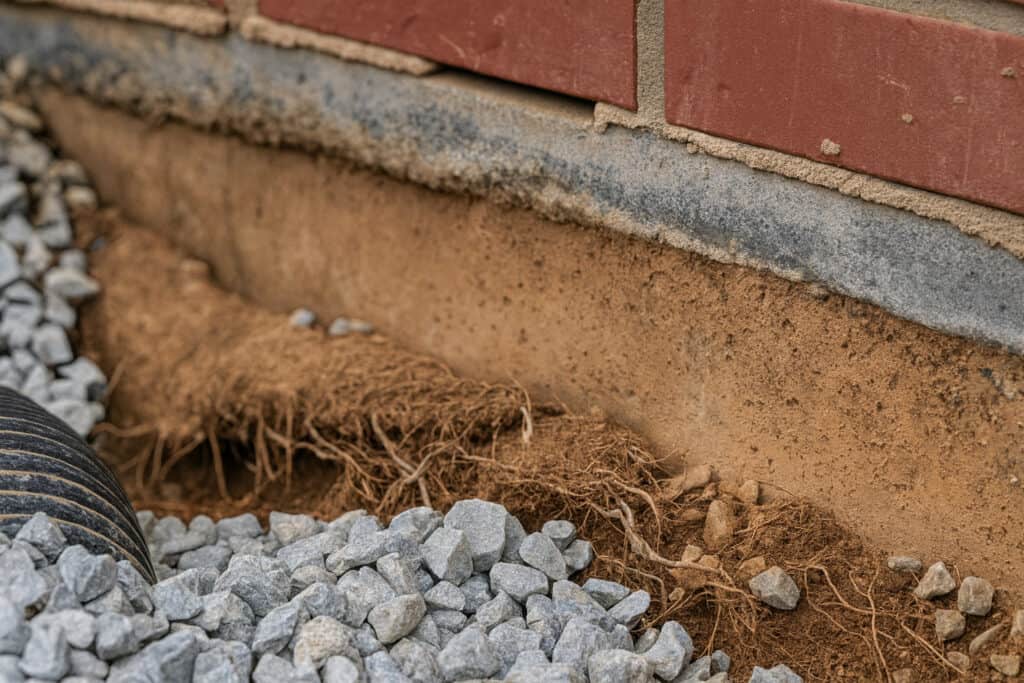
Above, is an example of severe soil erosion exposing a home’s foundation. Heavy rain and poor drainage have washed away soil, which can undermine the foundation’s support.
Understanding the Problem: Why Foundation Erosion Matters
Soil erosion is the gradual wearing away of the topsoil due to water, wind, or other forces. Around a home’s foundation, the primary culprit is usually water runoff from rain or improper drainage. When heavy downpours or continuous rainfall occur, water flowing next to the house can strip away vital soil near the base of the foundation. This is especially true if your yard is not graded correctly or if roof gutters are missing or not functioning. As soil washes away, the foundation loses the lateral support that the earth provides. Think of the soil as part of your foundation’s support system – without enough soil, the weight of your house becomes concentrated on smaller areas, increasing stress on the foundation. Over time, this can lead to settling, cracks in walls or floors, and even structural instability.
It’s important to realize that some degree of erosion is a natural process, but it becomes a serious concern when it’s happening right against your home. If you notice patches where soil has washed away from the foundation walls or you can see the top of your foundation’s footing, it’s a clear warning sign that erosion is damaging the support around your home. Addressing these issues promptly is critical to avoid more severe damage and costly repairs down the line.
Common Causes of Soil Erosion Around Foundations
Several factors can contribute to soil erosion around your house foundation. Understanding these causes will help you target the right fixes:
- Poor Grading (Negative Slope) – The land around your home should slope away from the foundation. If your yard or flower beds are graded toward the house (negative slope), water will be funneled directly to your foundation instead of away from it. This is a one-way ticket to foundation washout, as water will continuously saturate and erode the soil at the base of your walls.
- Short Downspouts or Lack of Gutters – Downspouts that dump rainwater too close to the house can quickly eat away at the soil near the foundation. Likewise, if you have no gutters, rain cascades off the roof in the same spots along the eaves, pounding the soil below and causing it to erode. Over time, this creates trenches or depressions along the foundation perimeter.
- Heavy Rainfall and Runoff – Intense or prolonged rainfall is a major cause of erosion. During heavy storms, large volumes of water flow over the ground. If this runoff isn’t directed elsewhere, it will carry off topsoil around the house. Stormwater runoff that can’t properly soak into the ground will take soil with it as it moves. Homes at the bottom of slopes or hills may also face runoff from neighboring properties.
- Lack of Vegetation – Bare soil is highly vulnerable to erosion. Grass, shrubs, and other plants help hold soil in place with their root systems. If the area around your foundation is mostly bare dirt (or was recently disturbed by construction or landscaping), you have nothing anchoring the soil. Grass and plant roots act like a net that stabilizes soil; without them, even a moderate rain can wash soil away.
- Improper Landscaping and Hardscaping – Certain yard features can inadvertently cause erosion if they aren’t installed with drainage in mind. For example, a patio that slopes toward the house or paved surfaces that channel water to the foundation can contribute to erosion. Removing trees or shrubs without proper ground cover replacement can also increase erosion risk, since you lose those stabilizing roots.
- Soil Type and Composition – Some soils are more prone to erosion than others. Sandy or silty soils can wash away quickly, while clay soils might hold firm until they become oversaturated, then they can suddenly slump or erode in chunks. Soil composition also affects drainage: clay-heavy soil may lead to more surface runoff (and thus more erosion) because water doesn’t soak in readily. On the other hand, very loose sandy soil might wash out because it can’t hold together well. Knowing your soil type is useful; for instance, the USDA notes that soil stability is influenced by its makeup and how it’s layered. If you live in an area with soil that erodes easily, you’ll need to be extra vigilant with erosion control measures.
Dangers: How Erosion Can Damage Your Foundation
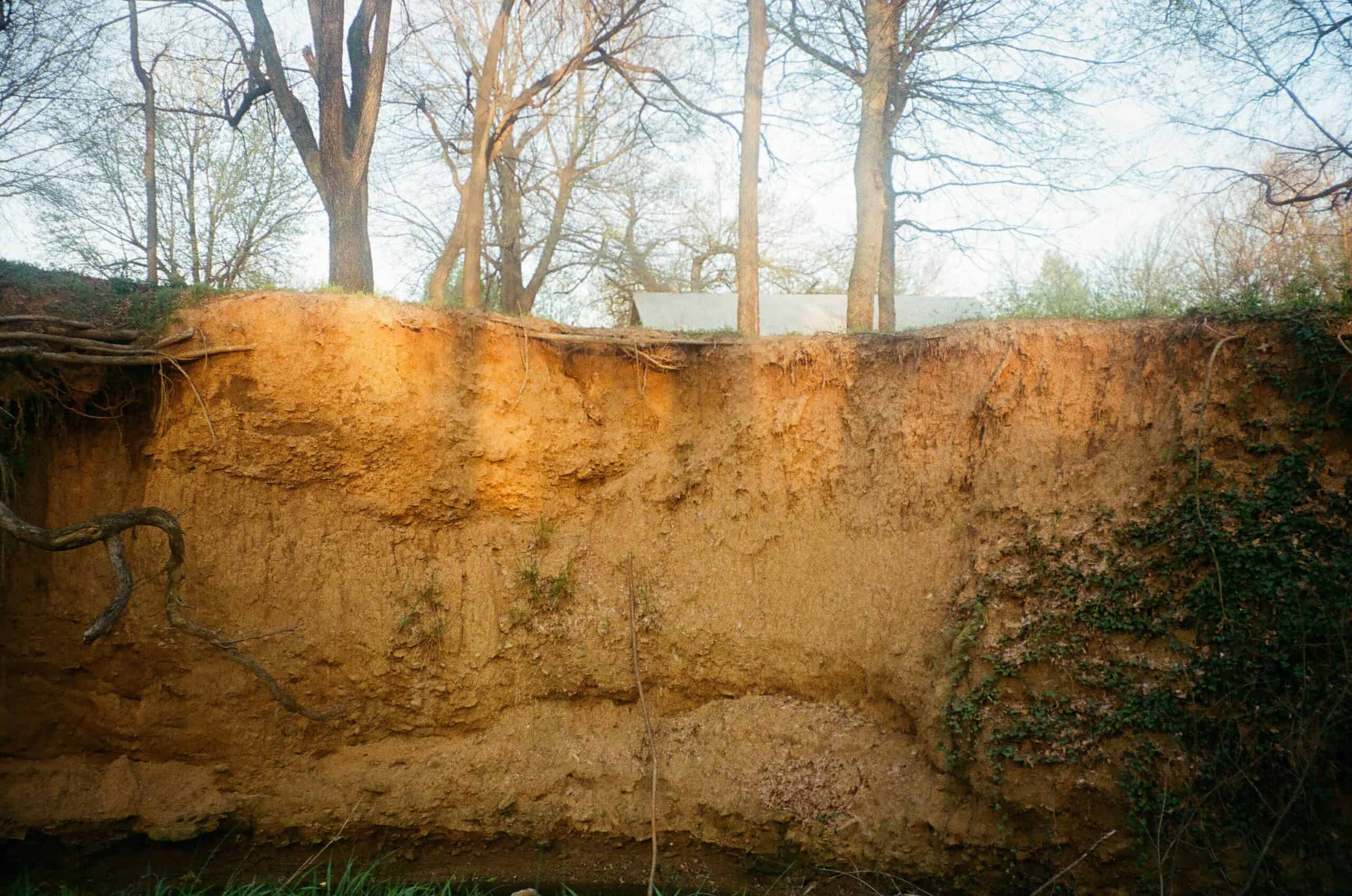
Allowing erosion to continue unchecked can result in serious damage to your home’s foundation and overall structure. Here are some of the key risks and consequences:
- Foundation Settlement and Cracks: When soil is removed from around and under the foundation, sections of the foundation may start to settle or sink unevenly. Your foundation relies on compacted soil for support; without it, parts of the house can drop. This leads to cracking in foundation walls, basement floors, and even interior drywall. You might notice diagonal cracks in walls or gaps where walls meet ceilings – signs that sections of the house are shifting.
- Exposed Footings: The concrete footing at the bottom of your foundation is meant to be buried for protection and support. If erosion exposes the footing, it becomes susceptible to weathering and water damage. An exposed foundation footing is a serious red flag – it means a significant amount of supporting soil is gone. With the footing no longer fully supported, the foundation wall above can crack or tilt.
- Water Seepage and Basement Leaks: Erosion often creates channels or paths for water. Soil that has been washed away can leave gaps and voids through which water can flow more easily towards your foundation. During the next rain, you might get water seeping into your basement or crawl space via these erosion channels. Persistent moisture can lead to mold growth and wood rot in addition to the immediate issue of a wet basement.
- Structural Instability: In worst-case scenarios, severe erosion can compromise the structural integrity of the building. If enough soil under a portion of the foundation is lost, that part of the house could shift or settle dramatically. This puts stress on the entire structure. Signs of advanced foundation trouble might include doors and windows that jam or won’t close (from frame warping), significant cracks in brickwork, or sloping floors. Ultimately, if not addressed, foundation failure could occur – which is a very costly repair and safety hazard.
- Damage to Landscaping and Property: Aside from the foundation itself, ongoing erosion can ruin your landscaping, walkways, or patio. You might see gullies in your yard or washed-out flower beds. Soil that washes away can also clog drains or create sediment deposits on sidewalks. These are ancillary issues, but they underscore that erosion is literally reshaping your yard in a destructive way.
In summary, foundation erosion is not just an eyesore – it directly affects the stability of your home. The longer these problems persist, the more expensive the eventual fix can become. That’s why it’s crucial to take action as soon as you notice erosion around your foundation.
Signs of Soil Erosion Around the Foundation
Catching erosion early can save you a lot of trouble. Here are some warning signs that you may have soil erosion or related foundation issues:
- Visible Gullies or Depressions: After a rain, do you notice small gullies (rills) in the soil or sunken areas along the foundation? This is a direct sign of runoff carrying soil away. You might also see soil splashed up on the foundation wall, indicating where dirt has been displaced.
- Exposed Foundation Concrete: Walk around your home and inspect the base of the foundation. If you can see areas of the concrete foundation that were previously covered by soil, or if the metal foundation footing is peeking through, that means erosion has removed the covering layer of earth. Any exposed footing is cause for concern.
- Puddles or Pooling Water Near the House: If you see water pooling near your foundation after rain, it’s a sign of poor drainage and potential erosion issues. Standing water next to the foundation after rain indicates water isn’t being carried away. If water is not draining away, it’s likely soaking into and carrying off the soil where it sits, which often leads to erosion in that spot.
- Cracks in Walls or Foundation: Keep an eye on your basement walls, foundation blocks, and even the exterior brick or stucco. New cracks or widening cracks can signal that the foundation is moving due to loss of supporting soil. Likewise, cracks in interior drywall, especially around corners of doors or windows, might indicate uneven settling.
- Sticking Doors or Windows: If suddenly a door in your house no longer closes easily or a window jams, it could be due to the frame becoming out of square. Foundation settlement from erosion can twist the frame of the house, causing these functional issues.
- Tilting or Uneven Floors: An extreme sign is when floors start to slope or feel uneven underfoot. You might notice this in the basement or ground floor if part of the foundation has sunk. Sometimes you can feel it, or you might notice furniture or appliances no longer sit level.
- Damp Basement or Crawl Space: Even if you don’t see water puddles, a damp or musty smell in the basement could hint that water is finding its way in through new paths created by soil loss. Check along the base of basement walls for any water stains or mold growth.
If you detect several of these signs together, it’s a strong indication that soil erosion and possibly foundation damage is occurring. At that point, you’ll want to implement fixes immediately (and consider consulting a professional for an inspection).
How to Fix Soil Erosion Around Your Foundation
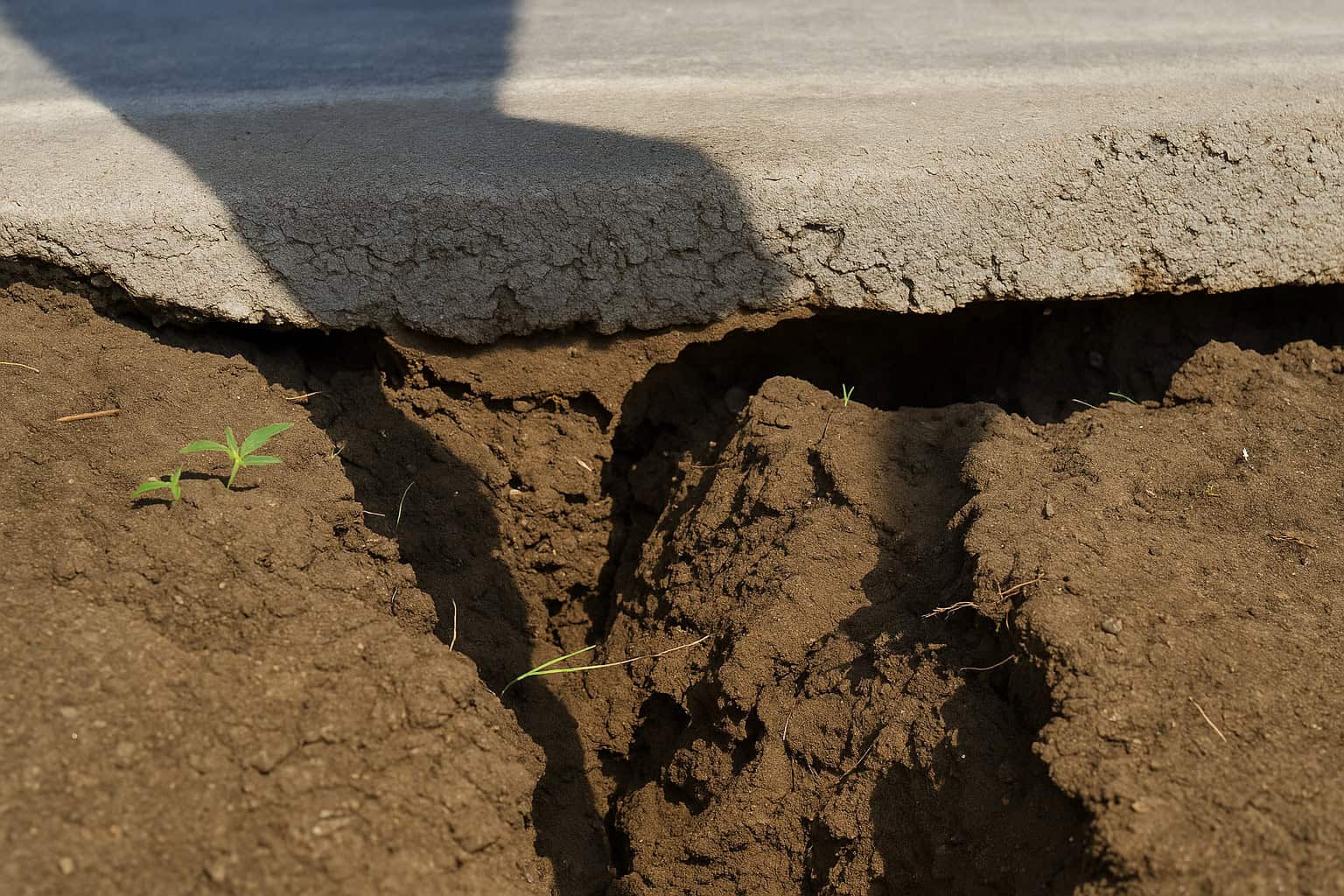
Fixing soil erosion around a foundation typically involves a combination of regrading the soil, improving drainage, and reinforcing the soil with plants or structural solutions. In many cases, you can tackle these steps as DIY projects, especially if the erosion is moderate. However, severe erosion or foundation damage may require professional intervention (more on that later). Below are effective methods to fix and prevent further erosion around your home’s foundation.
1. Regrade the Terrain Around the Foundation
One of the most important fixes is to ensure the ground slopes away from your house. Proper grading means that for the first several feet out from the foundation, the soil should gently slope downward, guiding water away from the base of your home. A general rule of thumb is a drop of about 6 inches over the first 10 feet away from the house. This equates to a slope of roughly 5%. If your current grading doesn’t meet this, you’ll need to build it up.
How to regrade: Add fill soil (preferably a clay-based soil that compacts well) to the areas near the foundation to create the slope. It’s best to do this when the soil is somewhat moist but not muddy, so it compacts readily. Start at the foundation wall and work outward, creating a gentle slope. Every few feet, tamp the soil down with a hand tamper or plate compactor to ensure it’s packed tightly – this prevents the new soil from quickly eroding away or settling. Aim for that 6-inch drop over 10 feet; you can use a level on a long board, or a string level, to help guide your slope.
Be mindful of the siding or brick line on your house: you should not pile soil against wood siding or over any weep holes in brick walls. Generally, keep soil at least a few inches below the top of the foundation or the bottom of the siding to prevent moisture or pest issues. In cases where regrading to achieve slope is difficult (for example, if the yard is flat and you can’t add much height near the house without creating other problems), consider installing a sloping swale or a shallow ditch a few feet out that can carry water away. A plastic or rubber landscaping edging can also sometimes help keep the soil slope intact, acting as a mini retaining edge for your fill.
Tip: After heavy rains, walk around and observe how water flows. If you see any area where water is still running toward the house, add more soil and regrade that spot. You may need to recheck the grading each year, as soil can settle or get displaced over time. Regularly filling low spots ensures that water doesn’t find a path to your foundation.
2. Fix Gutters and Extend Downspouts
Your roof sheds a huge volume of water when it rains – all that water hits the ground right by your foundation unless it’s properly channeled elsewhere. Functioning gutters and downspouts are essential for preventing soil erosion.
- Clean and Repair Gutters: Make sure your gutters are clear of leaves and debris so that they don’t overflow. An overflowing gutter dumps water directly on the ground below, causing erosion. Clean them out at least twice a year (more if you have overhanging trees). Check for any leaks or sagging sections while you’re at it.
- Install Gutter Guards (optional): If you’re frequently battling clogged gutters, consider installing gutter guards or screens. These help keep out leaves and can reduce how often you need to clean gutters. While not directly related to erosion, they improve the reliability of your gutter system. Look into these A-M Gutter Guards on Amazon.
- Downspout Extensions: Ensure that your downspouts discharge at least 5 to 10 feet away from your foundation. You can attach inexpensive downspout extension pipes or splash blocks that carry the water further out. Flexible corrugated extensions can be used to divert water around landscaping if needed. The goal is to deposit the water far enough that it won’t run back toward the house. In fact, many foundation experts recommend 5–10 foot extensions as standard practice to protect the foundation. Look into this 2 Pack Gutter Extension on Amazon.
- Underground Drain Lines: For a cleaner look, you can run downspouts into buried PVC drain lines that lead to a safe discharge point (like a pop-up emitter further out in the yard, or to a storm drain if your local codes allow). This keeps water completely away from the surface near the foundation.
- Check Sump Pump Discharge: If you have a basement sump pump, make sure its discharge pipe also carries water far from the foundation. Sometimes these drain just a foot from the house, which is not good. Extend them with piping if needed.
By controlling roof runoff effectively, you eliminate one of the biggest contributors to foundation erosion. Observe during the next rainstorm: if you see water pooling or soil washing where the downspouts release, then your extension isn’t far enough or you need a better dispersal method at the end (like a splash block or dry well).
3. Install Drainage Solutions (French Drains, Swales, Dry Wells)
If your yard tends to collect water or has areas of poor drainage, you might need to implement additional drainage systems to protect your foundation. Simply put, any water that is not naturally draining away needs to be intentionally redirected.
- French Drain: A French drain is a classic solution for yard drainage and foundation protection. It’s essentially a gravel-filled trench with a perforated pipe at the bottom that collects and carries water away from problem areas. You can install a French drain along the perimeter of your foundation (a few feet out from the house) or in spots in the yard where water pools. The pipe should slope downhill to discharge the water at a lower point away from the home. Building a French drain is a doable DIY project: it involves digging a trench, lining it with landscape fabric, adding gravel and a perforated pipe, then more gravel, and covering with fabric and soil or decorative rock. The French drain will intercept water moving through the soil and redirect it, which helps keep the soil under your foundation drier and more intact.
- Swales (Dry Creeks): A swale is a shallow, gently sloping ditch that channels surface water. You can think of it as an artificial creek bed that only has water during rains. Swales are often landscaped with stones or grass. If grading alone isn’t solving runoff issues, a swale can be cut into the yard to lead water away. For example, you might create a swale that intercepts water halfway down a slope and routes it around the house to a lower area. Line the swale with rocks or erosion-resistant vegetation to prevent it from eroding too. A rock-lined swale (sometimes called a dry creek bed) can be both functional and attractive in your landscape.
A rock-lined drainage swale (dry creek bed) helps redirect rainwater away from the foundation. French drains or swales placed strategically can significantly reduce soil erosion by carrying runoff to a safe area.
- Dry Wells: In some situations, you might not have a good place to daylight the water from a French drain or swale. A dry well is an underground pit filled with gravel (or a plastic dry well tank) where water can collect and slowly seep into the surrounding soil. You can route a downspout or French drain into a dry well. It basically gives excess water a place to go that isn’t next to your foundation. Just make sure the dry well is located far enough from the house (usually 10+ feet away, and downslope) so that the water it holds won’t seep back toward your foundation.
- Surface Drains and Catch Basins: Another option for areas that flood is to install surface drains (like yard grates that lead into buried drain pipes). For example, if you have a low spot near the foundation where water always puddles, you can put a catch basin there and pipe it away. This is a bit more advanced DIY (involving PVC and possibly concrete work for the basins) but can be very effective for removing standing water. Here is an example of a highly reviewed Catch Basin.
Choosing the right drainage solution depends on your yard’s layout. Often a combination of measures works best. The key is to ensure water does not linger near the foundation. By capturing and redirecting runoff, you relieve the erosive pressure that water would otherwise have on the soil by your house.
4. Plant Grass or Ground Cover to Hold Soil
Vegetation is one of the simplest yet most powerful tools against erosion. Plant roots help bind soil together, making it harder for water to wash it away. If you currently have bare ground around your foundation, planting grass, shrubs, or other ground cover should be a top priority. Grass is often the first choice for open areas: a healthy lawn will absorb water and significantly reduce runoff. In fact, grassy areas can have up to 70% less runoff than bare soil, which means far less erosion.
For areas right next to the foundation, consider hardy ground covers or small shrubs (taking care not to plant large bushes or trees too close, as big roots can cause other issues). Native plants are a great option because they’re adapted to your climate and often have deep root systems. They also typically require less water and maintenance once established. Planting a mix of grasses and deep-rooted perennials on slopes can be particularly effective for slope stabilization.
If you have a slope near your foundation that’s hard to mow, using erosion-control plants or even wildflowers can cover the ground and protect against erosion without needing frequent mowing. Some homeowners use ornamental grasses on slopes for their extensive root systems.
When planting, use some mulch around the new plants to protect the soil while the vegetation fills in. We’ll talk more about mulch in the next section, but just ensure you don’t leave large patches of soil bare for extended periods. Seed or sod any bare soil promptly – even temporary fast-germinating cover crops (like ryegrass) can help in the short term while you plan a more permanent landscape.
Note: Avoid planting large trees extremely close to the foundation. While trees do help with soil retention, their roots can grow under foundations or suck too much moisture from the soil during dry spells, causing shrinkage. A general rule is to plant trees at least as far from the foundation as their mature height. For example, a tree that will be 30 feet tall should be at least 30 feet away from the house. Use smaller shrubs near the house and reserve trees for farther out in the yard.
5. Use Mulch or Rocks to Protect Bare Soil
Mulching is a great way to shield the soil surface from the direct impact of falling rain. When raindrops hit bare soil, they dislodge particles (this is called splash erosion) and start the erosion process. A layer of mulch absorbs that impact and slows down water runoff. Spread organic mulch (like wood chips, bark, straw, or pine needles) in any garden beds around your foundation and over any soil that tends to wash away. Mulch also helps retain soil moisture, which can prevent the soil from drying out and shrinking away from the foundation during dry periods.
However, be smart with mulch placement. Do not pile mulch right up against your foundation walls. Keep a gap of a few inches between mulch and the foundation to avoid trapping moisture against the house. Mulch against wood or siding can also invite pests. So, use it in moderation near the house: cover the soil but don’t lean it on the structure.
For areas immediately next to the foundation, some people prefer to use inorganic ground cover like gravel or river rock. Stones won’t wash away as easily as bare soil, and they can reduce weeds and erosion. If you choose to put a band of gravel along the foundation, make sure you still have landscape fabric or something underneath to prevent the soil below from washing out through the gravel. And just like mulch, the ground beneath the rocks should be graded properly. Gravel by itself doesn’t stop water from flowing toward your house; you need that underlayment of well-compacted soil sloping away. Think of gravel or rock as a protective top layer that reduces erosion and splash-back, rather than a solution to grading or drainage issues.
6. Consider Retaining Walls for Steep Slopes
If your house sits at the bottom of a slope or you have a hill where soil is sliding toward the foundation, a retaining wall might be the best fix. Retaining walls act like a shield that holds back soil and prevents it from moving downhill. They also help slow down water by terracing the slope, which means less runoff velocity hitting the lower areas.
For minor erosion on a short slope, a simple DIY retaining wall using interlocking concrete blocks or pressure-treated timbers could suffice. For example, you might build a small 1–2 foot high garden wall to hold the soil in a problematic spot. These materials often come with do-it-yourself friendly designs (blocks that stack with a lip, etc.). Ensure you tilt the wall slightly into the hill and provide some gravel backfill for drainage behind it.
In cases of a significant slope or severe erosion (say a steep hillside close to the house), you may need a larger, professionally engineered retaining wall. Large walls often require proper footings, drainage pipes (weeping tile) behind them, and possibly tie-backs or anchors if they’re very tall. A well-built retaining wall will last for decades and keep the soil where it belongs, whereas an improperly built one might fail and could even worsen the situation. So know your limits on DIY here – small wall, okay; big hill, call a pro.
When designing any retaining solution, also consider where the water will go. Retaining walls should usually incorporate drainage (holes or pipes) to let water through, otherwise water pressure can build up behind the wall. The goal is to retain soil, not water. Combined with other drainage methods like French drains or swales, retaining walls can be very effective at erosion control for hilly terrains.
7. Use Erosion Control Blankets or Fabrics
For immediate control of erosion on bare slopes or newly filled areas, erosion control blankets are extremely useful. These are mats made of biodegradable fibers (like coconut coir or straw) or synthetic mesh that you roll out over the soil. They provide an instant cover to hold the soil in place until vegetation takes hold. They help stabilize the soil and provide immediate protection against further erosion. If you’ve just regraded an area or added fresh topsoil near the foundation, consider covering it with an erosion control blanket, especially if rain is in the forecast. The blanket will prevent the new soil from washing away in the next storm.
Erosion control blankets are fairly easy to install as a DIY measure. Roll them out over the area, stake them down with landscape staples, and overlap the edges of multiple blankets according to the product instructions. They often biodegrade after a couple of years, by which time your grass or plants should be established. One common scenario for using these is on a slope where you’ve seeded grass; the blanket holds the seed and soil in place against rain and wind while the grass germinates.
Geotextile fabrics can also be used under gravel or mulch to add stability and prevent soil migration. For example, if you put gravel along your foundation, laying a layer of landscape fabric first will keep the soil underneath from mixing with the gravel and potentially washing out.
8. Maintain Your Improvements and Monitor the Situation
After doing all this work to fix erosion, don’t forget that ongoing maintenance is key to long-term success. Here are some maintenance tips:
- Regularly Inspect Gutters/Downspouts: Especially after autumn leaf fall and after big storms. Clear out debris so that your drainage systems keep working. Also inspect your gutters and downspouts during and after heavy rains to ensure they are properly moving water away from the foundation.
- Watch for Changes After Heavy Rains: After major weather events, walk around your house and look for any new signs of erosion or water pooling. If you spot a new gully or puddle, address it before it grows – add soil to low spots, adjust your downspout if it came loose, etc.
- Maintain Vegetation: Keep your grass healthy by watering it during very dry spells (this prevents the soil from shrinking and cracking). If you notice any bald patches of lawn or dead plants, replant them so you don’t leave bare soil exposed. Trim back overgrowth in gutters or along the house that might interfere with drainage.
- Check Mulch and Gravel Layers: Over time, mulch may decompose or wash away. Add more mulch as needed each year to maintain a protective layer. Rake gravel back into place if it shifts. Ensure the depth is sufficient to cover the soil.
- Test Your Slope Periodically: Re-check the grading by laying a 10-foot 2×4 with a level on it, one end at the foundation. Make sure you still have that 6 inch drop. Sometimes minor settling can flatten your slope, so you might need to top up some soil after a couple of years.
- Protect During Projects: If you do any work that involves digging near the foundation (like installing a new garden bed, or doing utility work), be conscious of how you restore the soil after. Always recompact and regrade excavated areas. Also, during any landscaping or construction, use temporary erosion control (like those blankets or at least tarps) if soil will be bare and rain is expected.
By staying vigilant, you can catch small erosion issues early and preserve the protective measures you’ve put in place. Erosion can be an ongoing concern in certain climates (for instance, regions with heavy seasonal rains), so think of this as an ongoing maintenance task for your home, much like cleaning gutters or checking your sump pump.
When to Call a Professional
While many erosion control techniques are DIY-friendly, there are situations where professional help is wise:
- Significant Foundation Damage: If erosion has already caused noticeable foundation problems (large cracks, foundation wall movement, parts of the foundation sinking), you should have a professional foundation contractor assess the situation. They might recommend solutions like underpinning (using steel piers or helical piers to support the foundation) to stabilize your home. These are not DIY fixes, but rather structural repairs to restore integrity if the foundation’s support has been compromised.
- Severe or Ongoing Erosion: If despite your best efforts the erosion continues, or if you have a very challenging property layout (like a steep hill that’s beyond the scope of simple interventions), an erosion control or drainage specialist can design a more robust solution. This could include engineered retaining walls, professionally installed drainage systems, regrading with heavy equipment, or soil stabilization treatments. In some cases, contractors may use techniques like soil nailing or special polymers to stabilize a steep slope.
- Drainage Design Help: Maybe you’re not sure how to safely route water off your property without affecting a neighbor, or you have a high water table making things complicated. Drainage experts or civil engineers can provide plans that ensure water is managed correctly. They can also install sump pump systems for yards if gravity alone isn’t enough to move the water.
- Peace of Mind: If you’re unsure about the extent of the problem, consider getting a professional foundation inspection. Many foundation repair companies offer free foundation inspections. They can tell you if what you’re seeing is superficial or a sign of a bigger issue. This expert insight can guide your next steps – whether it’s simply implementing the DIY measures outlined above or scheduling a foundation repair. An inspection might also include a soil analysis, where professionals identify if the soil around your home has problematic properties (like being too loose or expansive) that need special attention.
Remember, there’s no shame in calling professionals for help – your home’s structure is at stake. Particularly if you suspect any danger to your home’s stability, an expert evaluation is worth it. As one foundation expert advises, if erosion has already damaged the foundation, call a repair specialist before the problem worsens. They can also help with preventative installations such as French drains or advanced grading if you don’t have the tools or physical ability to do it yourself.
Frequently Asked Questions About Fixing Foundation Erosion
What causes soil erosion around a home’s foundation?
Common causes include poor drainage, negative grading, clogged gutters, downspout runoff near the foundation, and lack of vegetation. Over time, these allow rainwater to wash away the supporting soil under your home.
How can I tell if erosion is damaging my foundation?
Look for visible gaps between soil and your foundation, cracks in walls or basement floors, leaning walls, or areas where water pools after rain. These are signs that the soil beneath your foundation is shifting or washing away.
What’s the best way to prevent erosion near my foundation?
Ensure your yard slopes away from your home, extend downspouts at least 6–10 feet, keep gutters clean, and plant deep-rooted vegetation or install erosion control fabric on slopes.
When should I call a professional for foundation erosion?
If you notice structural cracks, uneven settling, or significant soil loss, it’s best to contact a foundation repair or drainage specialist. They can assess the extent of damage and recommend permanent stabilization solutions.
Can I fix soil erosion around my foundation myself?
Minor erosion can often be managed with DIY methods like regrading, adding topsoil, or installing drainage extensions. However, severe or recurring erosion typically requires professional evaluation and repair.
In Closing
Soil erosion around your foundation is a serious issue, but by understanding the causes and taking proactive steps, you can protect your home from further damage. Start by correcting drainage problems – ensure water is directed away with proper grading, gutters, downspouts, and drains. At the same time, shore up the soil itself through landscaping: plant grass or groundcover to hold the earth in place, use mulch or gravel to shield the soil, and install retaining walls or erosion blankets for extra support on slopes. These solutions work together to stabilize the soil and keep your foundation safe.
By investing a bit of time and effort now, you’ll save yourself from the headache of foundation repairs down the road. Regular maintenance and a watchful eye are key – check your home’s perimeter after heavy rains and address any minor erosion before it grows. A stable foundation means a safe home, so it’s well worth the work to fix erosion issues early. With the strategies outlined in this guide, you can confidently fix soil erosion around your foundation and ensure your house stays standing on solid ground for years to come.



Pingback: Vertical vs Horizontal Foundation Cracks: Causes & Fixes